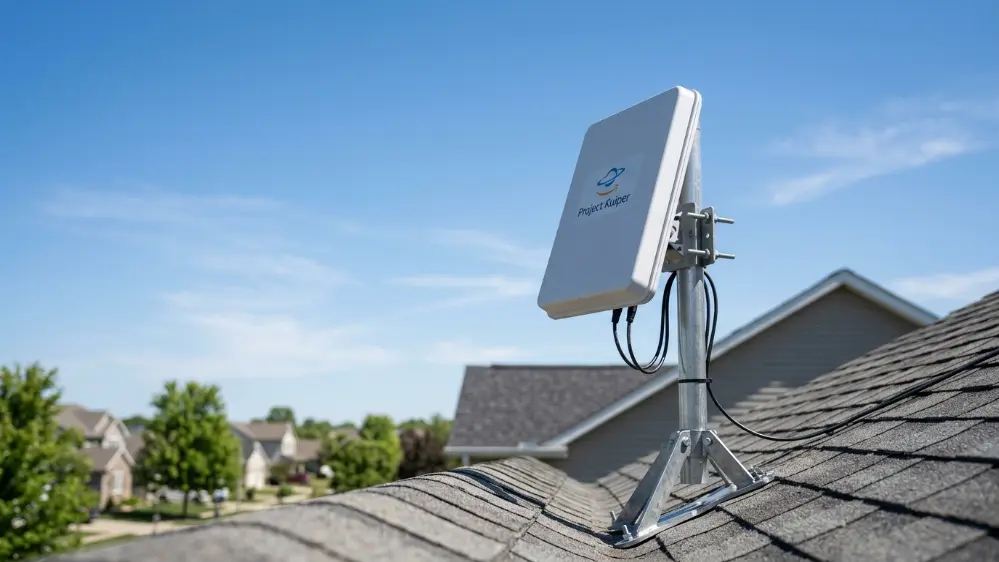
Amazon Leo explained simply: it’s Amazon’s low Earth orbit satellite internet network, formerly known as Project Kuiper, designed to compete directly with SpaceX’s Starlink. On July 2, 2026, Amazon announced that Amazon Leo had crossed a satellite deployment threshold that allows the company to begin initial service later this year. Here’s what the service actually offers, how it compares to Starlink, when you might realistically be able to sign up, and whether it’s worth waiting for over other options currently available.
What Amazon Leo Actually Is
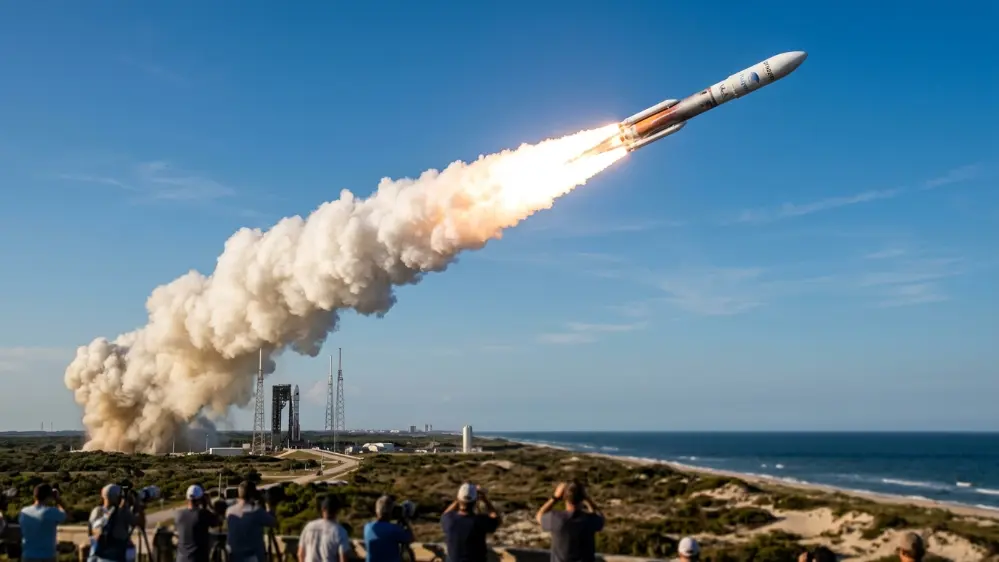
Amazon Leo uses a constellation of thousands of small satellites orbiting roughly 390 miles above Earth’s surface, a low Earth orbit approach that dramatically reduces latency and increases speeds compared to older satellite internet systems that rely on a single large satellite positioned around 22,000 miles above Earth. That’s the same fundamental approach SpaceX uses with Starlink, and it’s what allows both services to offer meaningfully better performance than older, higher orbit satellite internet providers like Hughesnet and Viasat.
Amazon CEO Andy Jassy has framed Leo’s mission around closing the digital divide for rural communities that currently lack reliable high speed internet access. In a letter to shareholders, Jassy described building the network over the past seven years, putting more than 200 satellites into orbit at that point, making it the third largest low Earth orbit network operating at the time, with a few thousand more satellites planned for launch in the coming years.
The project was originally announced under the name Project Kuiper before Amazon rebranded it as Amazon Leo, a name change that better reflects the low Earth orbit, or LEO, technology at the heart of the service, while also giving the project a more consumer friendly, memorable identity as it approaches an actual public launch.

The Hardware: Three Receiver Options
Amazon Leo will offer three distinct receiver terminal options, each targeting different use cases and budgets. The Nano terminal measures 7 by 7 inches and supports speeds up to 100Mbps, aimed at more basic residential use, likely the most affordable entry point once pricing is announced. The Pro terminal steps up to 11 by 11 inches, supporting speeds up to 400Mbps, positioned as a mainstream residential option for households with heavier streaming or remote work bandwidth needs. The largest option, the Ultra terminal, measures 20 by 30 inches and can deliver speeds up to 1Gbps, aimed at the most demanding users and enterprise applications.
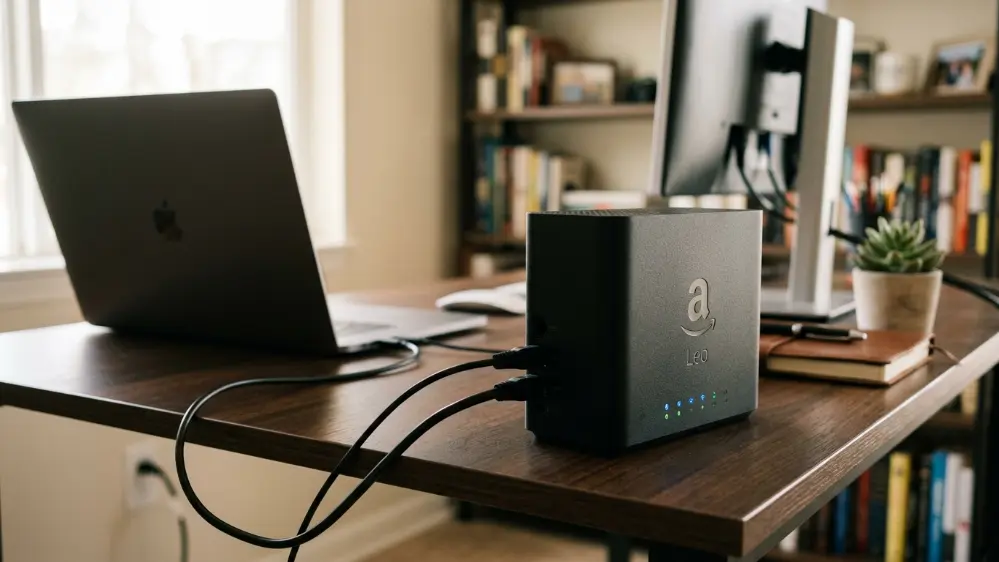
For comparison, Amazon has stated that Leo’s performance will be roughly six to eight times better on uplink and around two times better on downlink compared to what customers currently have access to through existing satellite alternatives, while also coming at a lower cost. Notably, the Amazon Leo router itself, revealed through FCC filings, is a compact box measuring about 6 by 6 inches, significantly smaller than Starlink’s standard router hardware, suggesting Amazon has prioritized a more discreet, less obtrusive home setup compared to its main competitor.
Deployment Progress and Timeline
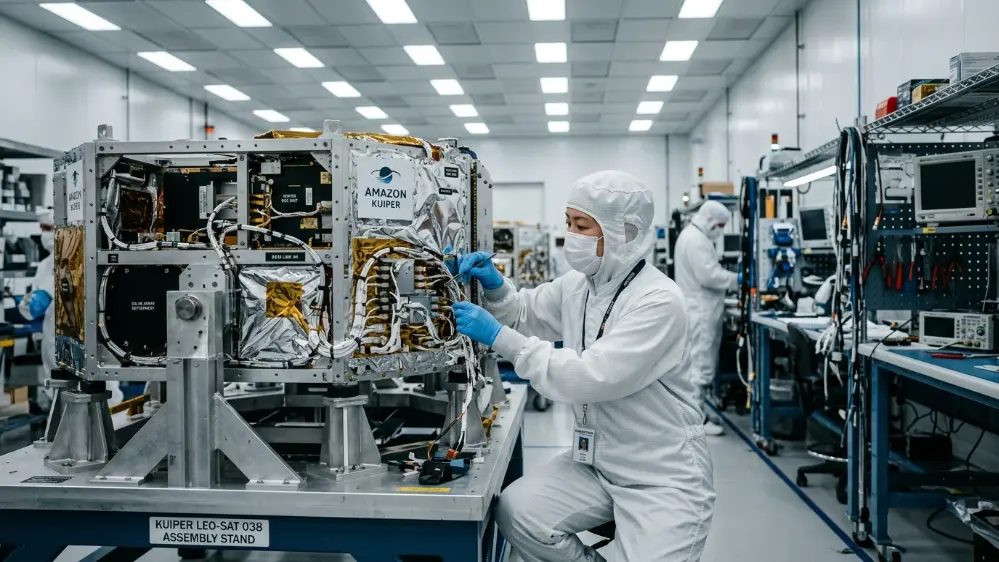
As of the most recent announcement, Amazon Leo has surpassed 390 satellites in orbit, a milestone the company says enables continuous coverage across its first planned service areas. Initial service is expected to be geographically limited at launch, focusing first on higher and mid-latitude bands before gradually expanding toward the equator over time.
Amazon’s first generation constellation targets roughly 3,200 satellites, with full deployment planned by mid-2029. That timeline has already shifted multiple times. Amazon originally hoped to begin service by late 2024, then pushed that to early 2025, and now expects a wider rollout later in 2026. The delays stem primarily from rocket launch shortages, manufacturing disruptions, and the grounding of certain new launch vehicles during development. Regulatory pressure has also played a role: the FCC requires Amazon to deploy half of its full constellation by a set deadline, and Amazon requested a two year extension to that deadline back in January 2026 due to the ongoing delays.
Interestingly, the FCC has also since approved a much larger long term target for Amazon, authorizing an additional 4,500 satellites on top of the original plan, bringing the total planned constellation size to 7,727 satellites, with a much longer deployment horizon stretching to February 2035 for full completion. That expanded authorization suggests Amazon is planning for Leo to grow well beyond its initial service capacity over the coming decade, rather than treating the first generation constellation as a final endpoint.
Despite the setbacks, Amazon has secured more than 100 rocket launches through partners including United Launch Alliance, giving the company substantial launch capacity to accelerate deployment once manufacturing and scheduling bottlenecks clear.
Where Amazon Leo Is Launching First
According to Amazon executives, the company originally aimed to launch service in five countries by early 2026: the United States, United Kingdom, France, Germany, and Canada. An enterprise preview program for select business customers began ahead of the wider consumer rollout. Amazon Leo is also reportedly eyeing entry into additional markets, including the Philippines, with regulatory filings already underway in some of those regions.
Given how closely Amazon has tied Leo’s mission to closing rural connectivity gaps, expect the earliest residential service areas to prioritize underserved rural regions within these initial countries, rather than dense urban centers that already have strong broadband competition from cable and fiber providers. That’s a similar rollout pattern to how Starlink initially prioritized rural and remote customers before later expanding capacity into more densely populated areas.
Amazon Leo’s Enterprise and Cloud Integration
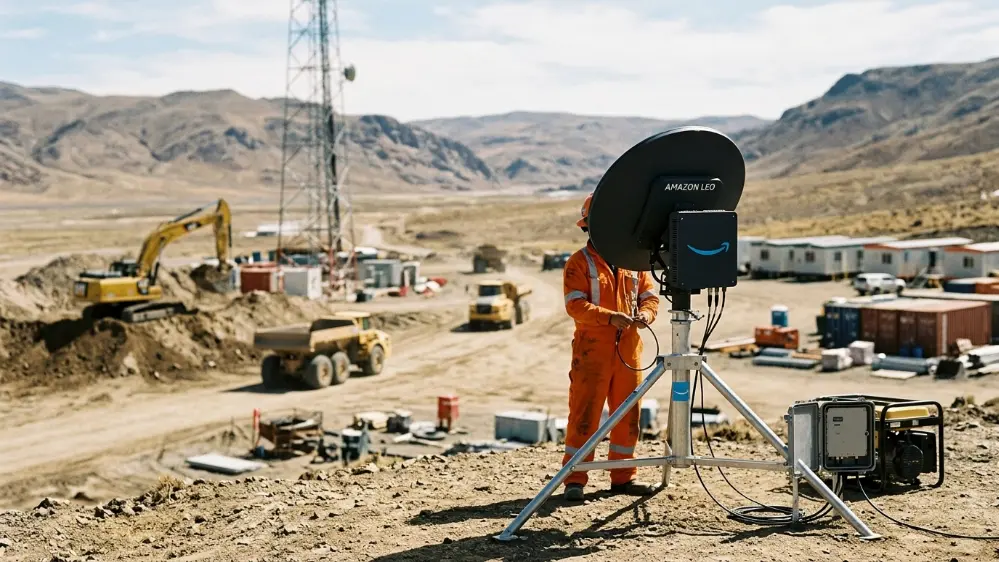
One of Amazon Leo’s more distinctive features compared to Starlink is its native integration with Amazon Web Services. A capability called Direct to AWS allows enterprise customers to route satellite traffic directly into their AWS cloud workloads through Transit Gateway or Direct Connect Gateway, bypassing the public internet entirely. For industries operating in remote locations, things like mining, energy, and defense, that creates a secure, low latency path from field operations straight to cloud computing resources.
A separate feature called Private Network Interconnect allows businesses and telecom providers to establish dedicated connections at major colocation facilities, linking remote sites directly to corporate data centers or core networks. The satellite constellation also uses optical inter-satellite links capable of 100Gbps over distances up to 2,600 kilometers, effectively creating a mesh network in space that reduces dependence on ground stations and can route data across continents while staying in orbit. Amazon plans more than 300 ground gateway stations globally to support this, supplementing its existing 12 AWS Ground Station facilities.
This enterprise angle is arguably where Amazon Leo has its clearest competitive advantage over Starlink. While SpaceX has its own enterprise offerings, Amazon’s ability to tie satellite connectivity directly into the broader AWS ecosystem, which already powers a huge share of global cloud infrastructure, gives Leo a genuinely differentiated pitch to businesses that already rely on AWS for their existing operations.
How Amazon Leo Compares to Starlink
Starlink currently operates more than 10,000 satellites and serves roughly 12 million subscribers worldwide, giving it a substantial head start in both scale and market presence. Amazon Leo enters 2026 as the only funded, technically credible challenger to that dominance, backed by native AWS integration, a compact and capable terminal lineup topped by the 1Gbps Leo Ultra, and more than $10 billion in committed investment.
Amazon’s approach also includes a custom chip called Prometheus, shared across both terminals and satellites, representing a vertically integrated hardware strategy that could help drive costs down as manufacturing scales up over time, similar in spirit to how Apple designs its own chips across its device lineup rather than relying entirely on third party silicon.
Where Starlink currently has the advantage is simply time and scale. With over 10,000 satellites already in orbit and millions of existing subscribers, Starlink has years of operational experience and a substantially larger existing customer base that Amazon Leo will need to catch up to gradually as its own constellation continues expanding toward its planned 3,200 to 7,727 satellite target range. Starlink has also had time to refine its pricing structure and hardware across multiple generations, including a smaller, more portable Mini terminal option that Amazon has yet to directly match, though the Leo Nano terminal appears aimed at a similar compact use case.
Regulatory and Environmental Considerations
Large satellite constellations like Amazon Leo and Starlink have both drawn scrutiny from astronomers and space safety researchers concerned about light pollution affecting ground based telescope observations, as well as the growing risk of orbital debris as thousands of additional satellites join already crowded low Earth orbit. Amazon has stated its satellites are designed with deorbit capabilities intended to minimize long term debris risk, a standard now expected of any company operating at this scale in low Earth orbit.
Regulatory deadlines from the FCC also remain an ongoing factor shaping Amazon’s deployment pace, with the company needing to continue demonstrating meaningful progress toward its authorized satellite targets to maintain its operating license. These are considerations worth being aware of as the broader satellite internet industry continues to scale, even though they’re unlikely to directly affect an individual customer’s day to day experience using the service.
Is Amazon Leo Worth Waiting For?
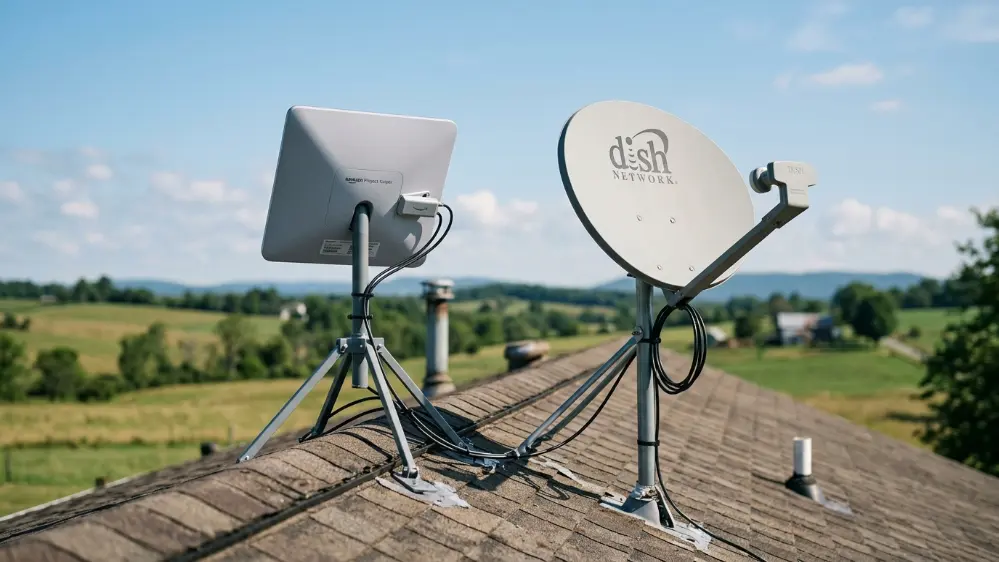
If you currently live in a rural or underserved area without reliable broadband access, Amazon Leo is genuinely worth keeping an eye on, particularly if you’re not thrilled about your only current alternative being Starlink or an older, higher latency satellite provider like Hughesnet or Viasat. The promised performance improvements, six to eight times better uplink and around double the downlink speed compared to existing alternatives, at a potentially lower cost, would represent a meaningful upgrade for rural connectivity if Amazon delivers on those figures at scale.
That said, the realistic timeline suggests early residential customers should expect service later in 2026 at the earliest, with wider availability likely continuing to expand gradually over the following one to two years as Amazon works through its ambitious satellite deployment targets. If you need better internet right now and Starlink is already available in your area, it remains the more proven option today, simply because it already has years of real world operation behind it that Amazon Leo hasn’t yet accumulated. For businesses already invested in AWS infrastructure specifically, Amazon Leo’s Direct to AWS integration may be worth waiting for even if Starlink is technically available sooner, given the potential efficiency gains from staying within a single cloud ecosystem.
Frequently Asked Questions
What is Amazon Leo? Amazon Leo, formerly known as Project Kuiper, is Amazon’s low Earth orbit satellite internet network, designed to provide broadband internet access, particularly to underserved rural areas, competing directly with SpaceX’s Starlink.
When will Amazon Leo be available to individual customers? Amazon has stated it expects to begin initial residential service later in 2026, though the exact timeline has shifted multiple times due to launch and manufacturing delays.
How fast is Amazon Leo internet? Amazon offers three receiver tiers: the Nano at up to 100Mbps, the Pro at up to 400Mbps, and the Ultra at up to 1Gbps.
Is Amazon Leo cheaper than Starlink? Amazon has stated that Leo will offer stronger performance at a lower cost than current alternatives, though exact consumer pricing has not yet been officially announced.
How many satellites does Amazon Leo have in orbit? As of the most recent update, Amazon Leo has surpassed 390 satellites, with a first generation target of roughly 3,200 satellites and a much larger long term authorized total of 7,727 satellites.
Does Amazon Leo work with AWS cloud services? Yes. Amazon Leo includes a Direct to AWS feature that lets enterprise customers route satellite traffic directly into AWS cloud workloads, bypassing the public internet entirely.
Is Amazon Leo available where I live right now? Not yet for most people. Initial rollout is expected in the US, UK, France, Germany, and Canada, with additional countries like the Philippines under regulatory review, but wide residential availability is still developing through the rest of 2026 and beyond.