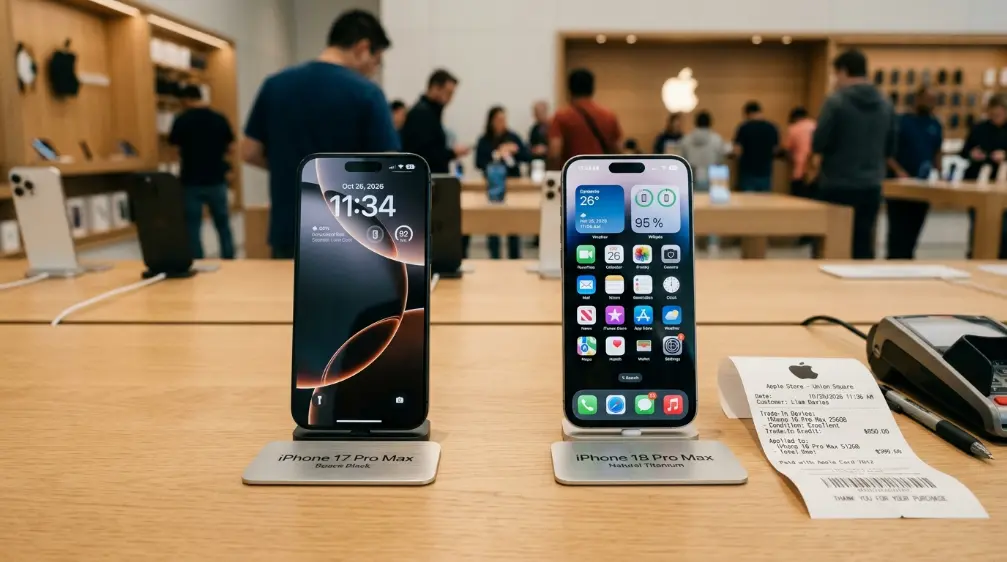
With pricing on the iPhone 18 Pro Max expected to climb this year, trading in your current phone is about to matter more than usual. A well timed trade-in can offset a genuinely meaningful chunk of the increased cost, but the value you actually get depends heavily on details most people overlook. Here’s how to approach it properly.
How Apple’s Trade-In Program Actually Works
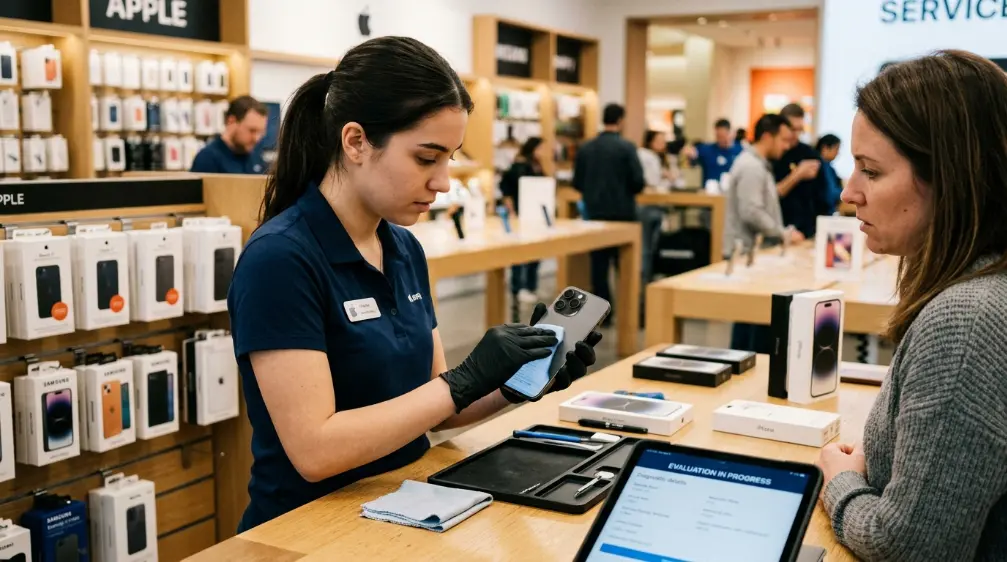
Apple’s trade-in program evaluates your current device based on model, storage capacity, and physical condition, then applies that value as instant credit toward a new purchase, either through the Apple Store, Apple’s website, or in partnership with a carrier. The evaluation typically happens in two stages. You get an initial estimate based on answering a few questions honestly about your phone’s condition, then a final confirmed value once Apple physically receives and inspects the device.
This two stage process matters because the final value can come in lower than the initial estimate if the actual condition doesn’t match what you described. Scratches, a cracked screen, battery health below a certain threshold, or a phone that doesn’t power on all affect the final number, sometimes significantly. Being accurate upfront about your phone’s real condition saves you the disappointment of a lower than expected final credit.
Carrier Trade-In Deals Versus Apple Direct
Carriers frequently offer trade-in values well above what Apple’s own program provides, sometimes dramatically so, but almost always with strings attached. The most common catch is a required new line activation or an upgrade to a specific, often pricier, monthly plan. These carrier deals also frequently pay out as bill credits spread over 24 or 36 months rather than upfront, meaning if you switch carriers or cancel service before that period ends, you can lose the remaining credit entirely.
Apple’s own trade-in program, by contrast, applies the full value immediately at the time of purchase, with no plan requirements or multi year commitment attached. If you value simplicity and don’t want to be locked into a specific carrier for two or three years, Apple’s direct trade-in is usually the safer choice, even if the headline number looks smaller than a carrier’s promotional offer.
Timing Your Trade-In for Maximum Value
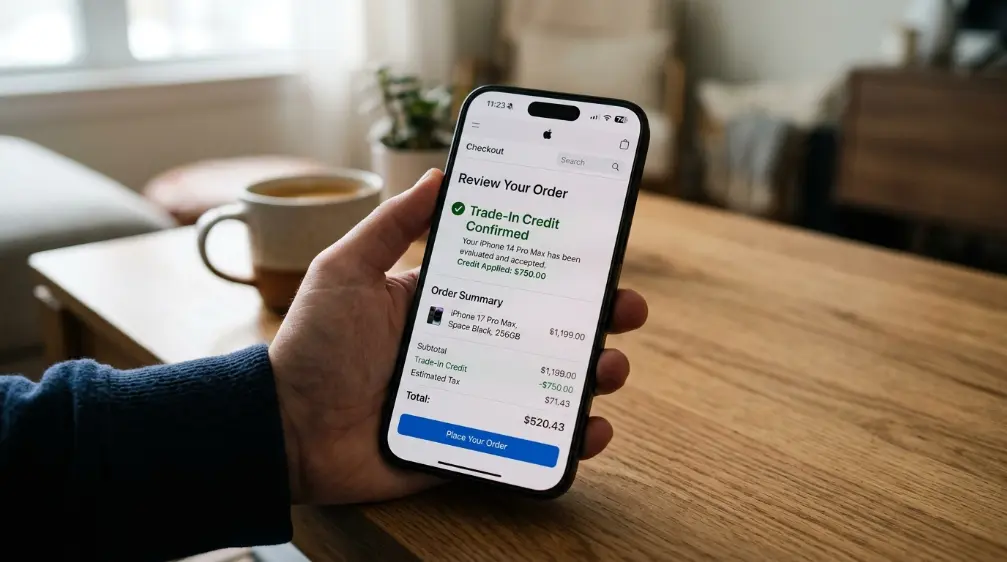
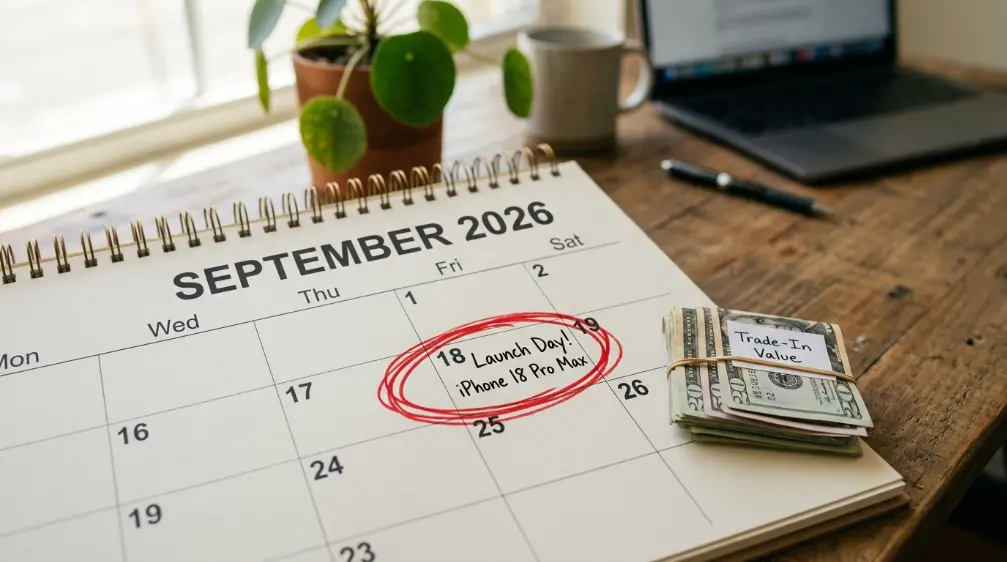
Trade-in values for any iPhone model decline steadily over time, and the decline accelerates noticeably once a new generation is officially announced. If you’re planning to upgrade to the iPhone 18 Pro Max, the highest value for your current phone will generally be right before Apple’s September announcement, not after. Once the new lineup is public, resale and trade-in values for older models typically drop within days as demand shifts toward the newest hardware.
If you can plan ahead, getting a trade-in quote locked in during the weeks leading up to the announcement, then completing the actual trade when you order your new phone, is usually the smartest approach. Some retailers also let you lock in a quoted value for a short window even if you don’t complete the trade immediately, which is worth asking about directly if you’re not ready to commit right away.
What Actually Affects Your Trade-In Value
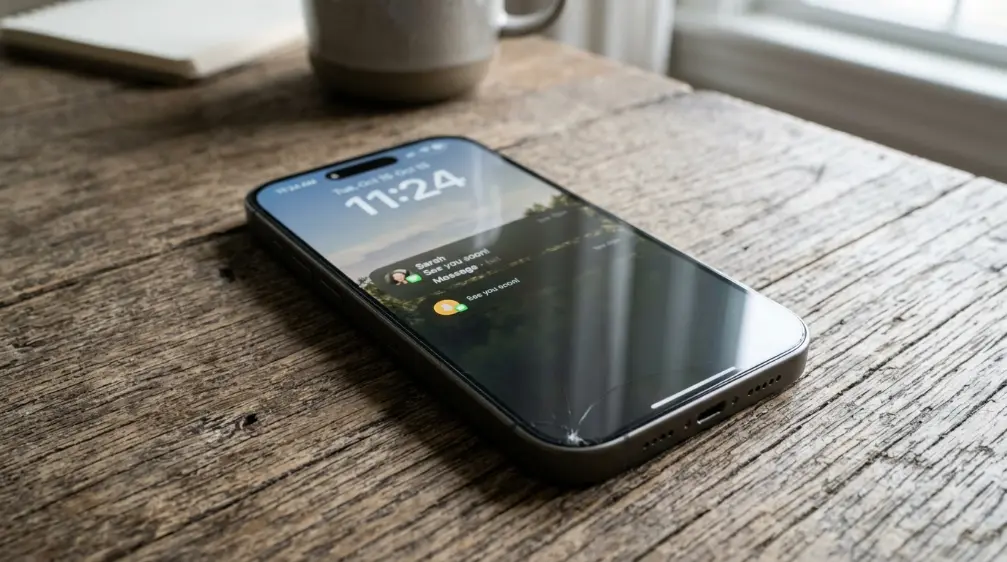
Storage capacity matters more than most people expect. A higher storage iPhone almost always retains significantly more trade-in value than the base model of the same generation, since resale demand for larger storage tends to stay strong even as the phone ages. Battery health is another major factor, particularly for phones being traded in after two or more years of regular use. If your battery has degraded below around 80 percent of original capacity, expect a noticeably reduced offer compared to a similar phone with a healthier battery.
Cosmetic condition matters too, though perhaps less than people assume for the numbers involved. A phone with a screen protector and case used consistently since day one, with no cracks or major scratches, will grade meaningfully higher than one with visible wear, but small scuffs on the frame typically have less impact than a genuinely damaged screen or a battery that no longer holds a charge well.
Should You Sell Privately Instead
Trading in isn’t always the highest value option, and it’s worth a quick comparison before committing. Selling your current iPhone privately, through a marketplace or a dedicated resale platform, often nets more money than an official trade-in program, sometimes by a meaningful margin, particularly for well maintained devices in high demand. The tradeoff is time and effort. Private sales require creating a listing, communicating with buyers, and often shipping the device yourself, none of which is required with an instant trade-in credit applied directly at checkout.
If your time is limited and you want the process handled in a single transaction at the point of purchase, trade-in remains the more convenient choice, even if it’s not always the absolute highest dollar amount available. If you’re specifically deciding whether upgrading is even worth it this cycle, our guide on whether to buy the iPhone 17 or wait for the iPhone 18 is worth reading before you commit to any trade-in plan at all.
International Trade-In Differences Worth Knowing
Trade-in values and program structures vary meaningfully depending on where you live, and this catches a lot of people off guard if they’re used to reading advice based purely on the US market. In some countries, official Apple trade-in programs offer noticeably lower values relative to the local cost of a new iPhone compared to what US customers typically see, while independent, third party trade-in and resale marketplaces sometimes offer more competitive rates in those same markets. If you’re outside the US, it’s worth comparing Apple’s official program against a couple of well reviewed local alternatives before assuming the official route is automatically your best option, since the gap between them can be more pronounced than it is domestically.
Currency fluctuations and import related pricing differences also mean that a phone considered mid-tier in trade-in value in one country might carry meaningfully different relative value elsewhere, particularly for phones that were never officially sold in a given market and instead entered through grey market imports.
The Environmental Angle: Why Trading In Matters Beyond the Money
Setting aside the financial incentive entirely, trading in an old device rather than letting it sit unused in a drawer has a genuine environmental benefit worth mentioning. Apple’s trade-in program refurbishes devices that still have useful life left and recycles components from those that don’t, recovering materials like rare earth elements and precious metals that would otherwise require new mining to produce. Even a phone with minimal remaining resale value due to age or condition is typically still accepted for responsible recycling rather than simply rejected, which is worth knowing if you assumed a very old or damaged device wasn’t worth trading in at all.
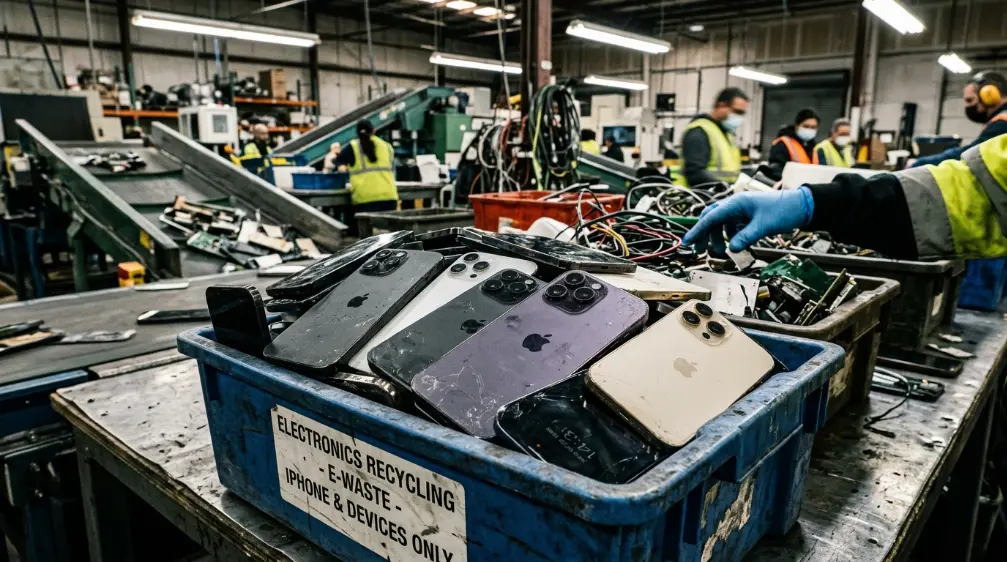
If maximizing your financial return isn’t your only priority, and you’d simply rather not have several old phones accumulating in storage indefinitely, trading in even a device you expect will fetch minimal credit is still a reasonable choice over letting it go to waste entirely.
What Happens to Your Data and Account During Trade-In
A common concern people have before trading in a phone is whether their personal data is genuinely removed, and whether their Apple ID stays properly protected throughout the process. Apple’s official trade-in process requires you to sign out of your Apple ID and erase the device completely before shipping or handing it over, a step covered in detail in our guide on transferring your data to a new iPhone, which also covers exactly how to prepare your old device once everything important has moved over successfully.
It’s worth double checking that Find My iPhone has been properly disabled and the device is fully signed out before finalizing any trade-in, since a phone still linked to a previous owner’s Apple ID typically can’t be activated by whoever receives it next, which can delay or complicate the entire trade-in process on the receiving end.
Bundling Trade-In With Other Apple Purchases
If you’re planning a larger purchase this fall that includes more than just the iPhone 18 Pro Max, it’s worth checking whether Apple or your chosen retailer offers any additional incentives for bundling multiple trade-ins or purchases together. Some retailers occasionally run promotions offering slightly enhanced trade-in values specifically when a purchase includes accessories or a second device, though these promotions tend to be time limited and vary by region, so checking current offers close to your actual purchase date rather than relying on older promotional information is the safer approach.
Common Trade-In Mistakes Worth Avoiding
A handful of mistakes come up repeatedly for people trading in a phone for the first time. Forgetting to remove a physical SIM card before shipping a device, if your carrier still uses one rather than eSIM, is a small but genuinely common oversight, and Apple’s trade-in packaging typically includes a reminder about this specifically because it happens so often. Another frequent mistake is underestimating how long the mail-in evaluation process can take when trading in remotely rather than in person at a physical store, which can delay your credit being applied if you were counting on it to offset the cost of your new purchase immediately.
It’s also worth double checking that any case, screen protector, or SIM tray attachments are removed before shipping, since Apple’s evaluation process focuses on the device itself and accessories included by mistake typically aren’t returned. Taking a few photos of your device’s condition before sending it off is a simple, low effort step that can help resolve any disputes if your final trade-in value comes back lower than the initial estimate and you want documentation of the phone’s actual condition at the time you sent it.
How Trade-In Compares Across Multiple Devices at Once
If you’re upgrading more than one device at the same time, perhaps both your phone and a tablet or older Apple Watch, it’s worth processing each trade-in separately rather than assuming a single bundled evaluation covers everything at once. Each device category has its own separate condition assessment criteria and value scale, and keeping them as distinct transactions, even if completed during the same overall purchase, generally makes it easier to track exactly what credit applied to which new item, useful for your own records regardless of whether anything ends up needing a follow up inquiry with Apple support later.
How Trade-In Programs Handle Devices With Activation Locks or Outstanding Balances
If your current iPhone is still tied to a carrier financing plan with an outstanding balance, or has an active Find My iPhone activation lock, both of these need to be resolved before a trade-in can be processed successfully. An outstanding finance balance typically needs to be paid off, either separately or sometimes netted against your trade-in credit depending on your carrier’s specific policy, before the device changes ownership. An activation lock left enabled will cause a trade-in evaluation to fail entirely, since Apple and most carriers won’t accept a device that still shows as locked to a previous owner’s account, so confirming Find My iPhone is switched off ahead of time is a genuinely important step, not just a suggestion.
Protecting Your Trade-In Value Between Now and Launch
If you know you’re planning to trade in your current phone toward the iPhone 18 Pro Max, a few simple habits between now and launch help preserve its value. Keeping it in a case and with a screen protector, avoiding unnecessary charge cycles that degrade battery health faster, and backing up and wiping the device properly before trading it in all matter. Once you’ve decided on your new phone, our guide on transferring your data to a new iPhone walks through the safest way to move everything over before you hand your old device off for trade-in.
Getting a Second Opinion on Your Trade-In Estimate
Before committing to any single trade-in offer, it’s worth getting at least one comparison quote from a different source, even if you ultimately plan to use Apple’s own program. A handful of reputable third party electronics buyback services publish instant online quotes you can check in a few minutes, giving you a useful benchmark for whether Apple’s estimate feels reasonable or notably low for your specific device and condition. This comparison step costs nothing and takes very little time, yet it can occasionally reveal a meaningfully better offer elsewhere, or simply give you confidence that Apple’s quote is already competitive before you commit to the trade.
Trading In an Apple Watch or iPad Alongside Your iPhone
If you’re upgrading beyond just your phone this fall, remember that Apple’s trade-in program isn’t limited to iPhones. Apple Watches, iPads, and even MacBooks can be traded in through the same basic process, evaluated on their own separate condition and model criteria. If you’re planning a broader refresh of your Apple devices around the same time as buying the iPhone 18 Pro Max, it’s worth checking trade-in eligibility and estimated value for every device you’re replacing, since combining several smaller trade-in credits can meaningfully offset the total cost of a larger multi-device upgrade, even if no single device alone provides dramatic savings.
Final Thoughts on Making Trade-In Work for You
The most important habit to take away from all of this is planning ahead rather than treating trade-in as an afterthought on launch day itself. Checking your device’s estimated value now, understanding what factors could reduce that estimate, and deciding in advance whether Apple’s program, a carrier deal, or private resale makes the most sense for your specific situation all put you in a stronger position than scrambling to figure this out the moment you’re already checking out with your new iPhone 18 Pro Max.

Frequently Asked Questions
When is the best time to trade in my iPhone for the iPhone 18 Pro Max? Generally right before Apple’s September announcement, since trade-in values for older models typically drop once a new generation is officially revealed.
Is a carrier trade-in deal better than Apple’s own program? Carrier deals often quote higher values but usually require a new line activation or a specific plan, paid out as bill credits over 24 to 36 months rather than upfront. Apple’s own program applies full value immediately with no commitment.
What affects my iPhone’s trade-in value the most? Storage capacity, battery health, and screen condition are the three biggest factors. A cracked screen or battery health below roughly 80 percent will noticeably reduce your offer.
Should I sell my iPhone privately instead of trading it in? Private sales often bring in more money but take more time and effort. Trade-in is faster and more convenient, applied instantly at checkout, even if it’s not always the highest possible amount.
Does trade-in value drop after a new iPhone is announced? Yes, typically within days of the announcement, as demand and pricing shift toward the newest model.
Is it worth trading in a very old or damaged iPhone? Often yes, even for minimal credit, since Apple’s program responsibly recycles devices with little remaining resale value, recovering materials that would otherwise require new mining to produce.
Do trade-in programs vary by country? Yes. Official trade-in values and program terms differ by region, and in some markets independent local resale platforms may offer more competitive value than the official program, so it’s worth comparing options where you live.