Alexa+ explained simply: it’s Amazon’s ground up rebuild of its voice assistant, powered by generative AI rather than the older rules based system Alexa relied on for over a decade. Amazon began rolling it out nationwide to all US Prime members on February 4, 2026, and has spent the months since expanding it well beyond the Echo speaker it started on. If you’ve heard the name but aren’t sure what’s actually changed, here’s the full picture, including how it works, where it’s available, and how it stacks up against the other major AI assistants competing for a spot in your daily routine.
What Makes Alexa+ Different From the Old Alexa
The Alexa most people grew up with could set timers, play music, and answer simple factual questions. That was largely it. Alexa+ is a fundamentally different product underneath, built using two AI systems working together rather than the older rule based command system. Amazon Nova, the company’s own large language model family, handles speed sensitive tasks like quick questions and device commands. Anthropic’s Claude technology handles more complex reasoning tasks, powering deeper analysis and more nuanced responses.
The two systems work together automatically behind the scenes, so simple requests get routed to Nova for fast responses, while more complicated reasoning tasks get handed to Claude for higher quality output. The practical result is an assistant that understands context across a conversation, remembers your preferences from earlier interactions, and can complete multi-step tasks that span several different services rather than handling one isolated command at a time.
This dual model architecture is actually a fairly clever engineering decision worth appreciating on its own. Rather than routing every single request through the most expensive, most capable model available, Amazon can keep quick, everyday interactions fast and cheap to process, while reserving the more resource intensive reasoning model for the cases where it genuinely improves the response quality.
The Rollout Timeline So Far
Alexa+ actually started as a limited early access program back in March 2025, roughly a year before its wider public debut. The full nationwide rollout to all US customers began February 4, 2026, making it free for the roughly 180 million US Prime members, while non-Prime members can access it as a standalone subscription for $19.99 per month. Given that Prime itself costs $14.99 per month or $139 per year and includes numerous other benefits, paying separately just for Alexa+ without Prime rarely makes financial sense for most households.
International expansion followed shortly after. The UK Early Access program started March 19, 2026, with pricing set at £19.99 per month for non-Prime members once that period ends. Canada’s Early Access period, which had actually begun back in November 2025, concluded on June 11, 2026, with the assistant becoming fully available in French and English at $27.99 CAD per month for non-Prime users. Mexico followed on January 22, 2026, at 399 Mexican pesos per month, then Spain on April 15, Italy on April 15, Germany and Austria on May 7, and France on May 26, each set at €22.99 per month for non-Prime members after their respective Early Access periods conclude. Brazil joined the list starting June 18, 2026. Amazon has stated it plans to expand Alexa+ to more than 10 additional countries throughout 2027.

Beyond the Echo Speaker: Where Alexa+ Now Lives
One of the biggest strategic shifts for Alexa+ has been moving it well beyond the Echo devices it started on. At CES 2026 in January, Amazon launched Alexa.com, bringing the assistant to the web browser for the first time, letting users type to Alexa+ through a traditional desktop interface rather than relying only on voice. A redesigned Alexa mobile app followed the same event, built around what Amazon describes as an agent forward experience, anchoring an “Ask Alexa” prompt at the bottom of the screen alongside personalized suggestions.
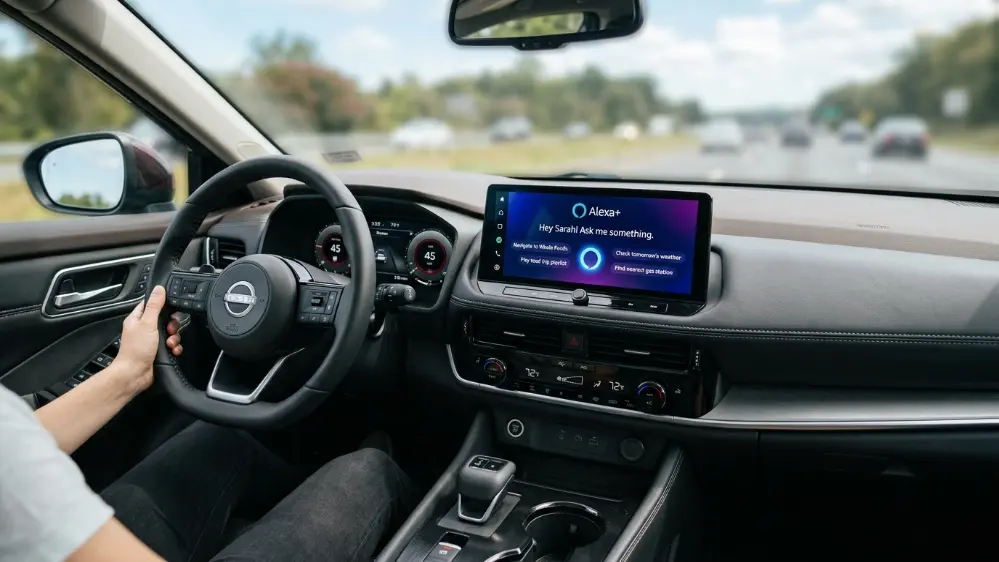
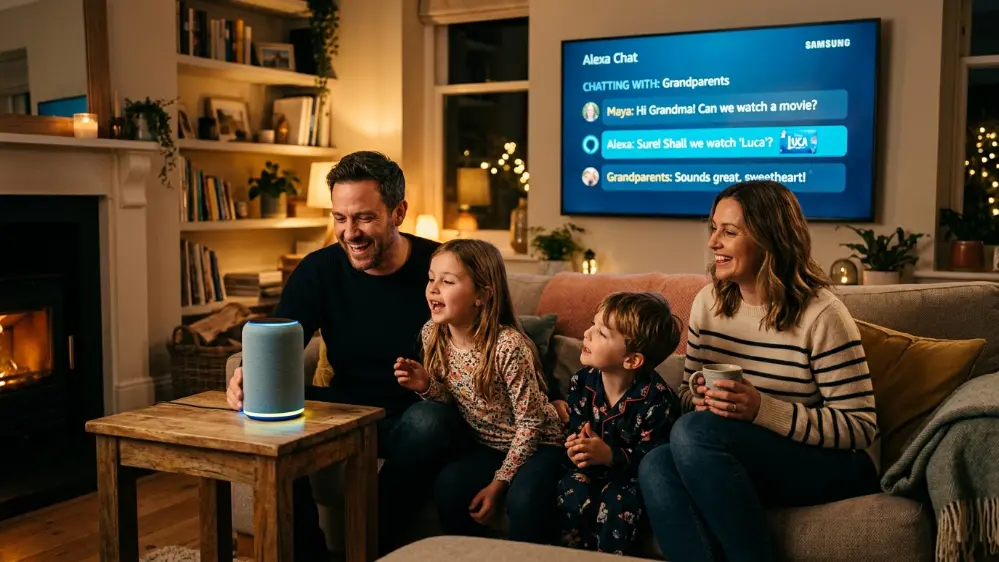
Amazon has also pushed Alexa+ into an expanding list of third party hardware. Samsung has begun adding Alexa+ to select smart televisions, marking the first time Alexa+ has been built directly into a third party device rather than something running only on Amazon’s own hardware. BMW has integrated the next generation of Alexa Custom Assistant, powered by Alexa+, into select vehicles including the latest BMW iX3. Bosch has enabled voice directed commands through Alexa+ in its 800 series fully automatic coffee makers. Oura has also rolled out early access to an Alexa+ integration, letting users track and act on their health information directly through the assistant, an interesting parallel to how Google’s Gemini now powers a similar AI coaching layer inside the Fitbit Air.
Other announced integrations include HERE Technologies and TomTom, which have built Alexa Custom Assistant into their mapping and location services for more intelligent in-vehicle navigation, and travel, dining, and home service partners like Expedia, Yelp, Angi, and Square, which let Alexa+ discover and book services directly on a user’s behalf.
What Alexa+ Can Actually Do
Amazon’s own figures suggest genuinely different usage patterns compared to the older Alexa. According to the company, customers using Alexa+ are having roughly twice as many conversations compared to the previous version, making three times more purchases through the assistant, and requesting recipes about five times more frequently. Daniel Rausch, Amazon’s vice president of Alexa and Echo, has stated that 76 percent of what customers do with Alexa+ isn’t possible with any other AI assistant, pointing to scenarios that go beyond simple chat, like controlling smart home devices, managing family logistics, and completing multi-step tasks across different services and screens.
Practical examples include discovering and booking services across travel, restaurants, home services, and personal wellness directly through the assistant, thanks to integrations with partners like Angi, Expedia, Square, and Yelp. New document integration also lets users upload emails or PDFs, things like school schedules or recipes, directly into a conversation with Alexa+, letting the assistant reference and act on that uploaded content.
A typical scenario Amazon has described involves mentioning wanting to catch up with a friend sometime the following week. Rather than requiring a separate explicit request, Alexa+ might proactively suggest a specific time based on your existing calendar availability and even recommend a restaurant based on your previously expressed taste preferences, then offer to complete the booking on your behalf.
Hardware Support and Device Compatibility
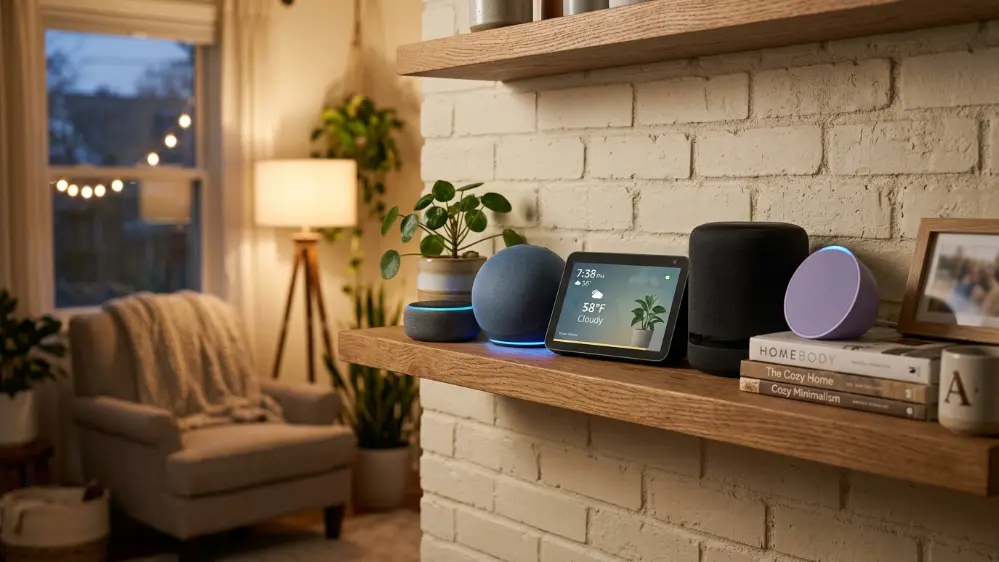
Alexa+ works across 97 percent of all Amazon devices ever shipped, according to the company, covering every Echo smart speaker variant including the Dot, Studio, and Max, all Echo Show display models, Fire TV devices, and Amazon Fire tablets. For the best experience, Amazon has also released purpose built hardware like the Echo Dot Max and Echo Show 11, both featuring custom AZ3 chips that Amazon says deliver 50 percent better wake word detection alongside more capable on device AI processing.
That broad backward compatibility is a genuinely important detail for existing Amazon customers. Rather than requiring a new hardware purchase to access Alexa+, the vast majority of Echo devices already sitting in people’s homes gained the upgraded assistant experience through a software update, which meaningfully lowers the barrier to actually trying it compared to competitors that require buying entirely new hardware to access their latest AI features.
Privacy Considerations Worth Knowing
Given that Alexa+ processes significantly more personal context than the original Alexa ever did, including document uploads, purchase history, and calendar information, privacy conscious users should take time to review Amazon’s current privacy settings and data handling documentation before diving in fully. Amazon does provide controls for reviewing and deleting voice recordings and adjusting how much personalization data the assistant retains over time, similar in spirit to privacy controls offered by competing assistants.
As with any AI assistant that’s deeply integrated into your home, car, and daily communications, the convenience trade off is worth thinking through deliberately rather than assuming default settings automatically match your comfort level. Amazon has faced scrutiny over data practices in the past, so reviewing current settings periodically as Alexa+ continues expanding into new integrations is a reasonable habit for any household that values keeping close track of what data it’s actually sharing.
How Alexa+ Compares to ChatGPT, Gemini, and Siri AI
Alexa+ enters a genuinely crowded field of capable AI assistants in 2026. Apple’s own Siri AI overhaul brought real conversational memory and screen awareness to iPhone, while OpenAI’s ChatGPT Work pushed ChatGPT into completing full documents and spreadsheets rather than just answering questions. We broke down how all three of the major software focused assistants compare directly in our Best AI Assistant Apps of 2026 roundup.
Alexa+’s biggest point of differentiation from that trio is its physical world integration. Where ChatGPT and Siri AI are primarily software experiences living inside a phone, computer, or standalone app, Alexa+ leans heavily into Amazon’s existing footprint of over 600 million Alexa enabled devices already sitting in homes, cars, and now select third party televisions and appliances. That gives Alexa+ a genuinely different kind of advantage: rather than needing to convince people to adopt a brand new device or app, it’s expanding the capabilities of hardware many households already own.
The tradeoff is that Alexa+ doesn’t currently offer the kind of dedicated business productivity tooling that ChatGPT Work provides, and it lacks the deep personal device screen awareness that defines Apple’s Siri AI. Alexa+ is betting that ambient, physical world usefulness, ordering food, controlling your thermostat, booking a service call, tracking a health metric, matters more to most households day to day than either of those specific strengths.

What Amazon Has Hinted Is Coming Next
Daniel Rausch has indicated that taking Alexa+ further beyond the home will be a major focus for Amazon through the rest of 2026, hinting at new “personal mobile devices” from Amazon designed specifically to let customers carry Alexa+ with them throughout the day, rather than leaving it tied to a stationary speaker or a car dashboard. That direction lines up with Amazon’s existing Bee wearable, an AI device the company acquired roughly six months prior to these comments, designed to understand daily habits and offer proactive assistance throughout someone’s day.
Amazon has also been in advanced discussions to invest up to $50 billion in OpenAI as part of a potential AI partnership, which could eventually mean OpenAI’s models becoming available for Alexa+ or other internal Amazon projects alongside the existing Nova and Claude combination, though nothing has been finalized on that front as of the most recent reporting. If that partnership does materialize, it would put Amazon in the interesting position of potentially running three different major AI labs’ models across its own products simultaneously.
Is Alexa+ Worth Using?
For Prime members, the calculation is straightforward, since Alexa+ comes included at no additional cost beyond a Prime subscription most people already have for shipping and streaming benefits. Given how deeply Alexa+ now reaches into smart home control, car integration, and even health tracking through partners like Oura, it’s become a genuinely more capable assistant than the Alexa most people remember from a few years ago.
For non-Prime members, paying a standalone subscription just for Alexa+ makes less sense financially when Prime itself often costs about the same or less while including considerably more value. If you’re already inside Amazon’s ecosystem through Echo devices, Fire TV, or a Ring security system, Alexa+ is worth actually using rather than ignoring, since a large share of what it now offers genuinely isn’t replicated by ChatGPT, Gemini, or Siri AI in quite the same ambient, cross device way.
Frequently Asked Questions
Is Alexa+ free? Yes, for Prime members in supported countries. Non-Prime members pay a standalone monthly subscription that varies by country, generally in the range of $19.99 to €22.99 per month.
What AI models power Alexa+? A combination of Amazon’s own Nova models, handling speed sensitive tasks, and Anthropic’s Claude technology, handling more complex reasoning and analysis.
Where is Alexa+ currently available? As of mid-2026, it’s available in the US, Canada, Mexico, the UK, Italy, Spain, Germany, Austria, France, and Brazil, with more than 10 additional countries planned for 2027.
Can I use Alexa+ without an Echo device? Yes. Alexa+ is now available through Alexa.com on the web and through a redesigned mobile app, in addition to Echo devices, Fire TV, and an expanding list of third party hardware like select Samsung TVs and BMW vehicles.
How is Alexa+ different from ChatGPT or Siri AI? Alexa+ leans heavily into physical world integration across hundreds of millions of existing Alexa devices, cars, and appliances, while ChatGPT and Siri AI are primarily software experiences centered around a phone, computer, or standalone app.
Does Alexa+ work with third party devices like smart TVs? Yes. Samsung has started building Alexa+ directly into select smart TVs, and other partners including BMW and Bosch have integrated it into vehicles and appliances.
Can I control what data Alexa+ stores about me? Yes. Amazon provides settings for reviewing and deleting voice recordings and adjusting personalization data, though it’s worth periodically checking these settings as Alexa+ continues expanding into new integrations.