Both the Oura Ring and the Apple Watch track your health. Both cost serious money. But they do very different things and choosing the wrong one could leave you disappointed.
This guide gives you a completely honest, side-by-side comparison so you can decide which one is actually right for you.
Oura Ring vs Apple Watch: Quick Summary
Before we go deep, here’s the quick verdict:
- Choose Oura Ring if: Sleep tracking and recovery data are your main priorities, you don’t want to wear a watch, and you value long battery life.
- Choose Apple Watch if: You want notifications, live workout tracking, GPS, apps, and a full smartwatch experience alongside health features.
Now let’s break it down properly.
What is the Oura Ring?
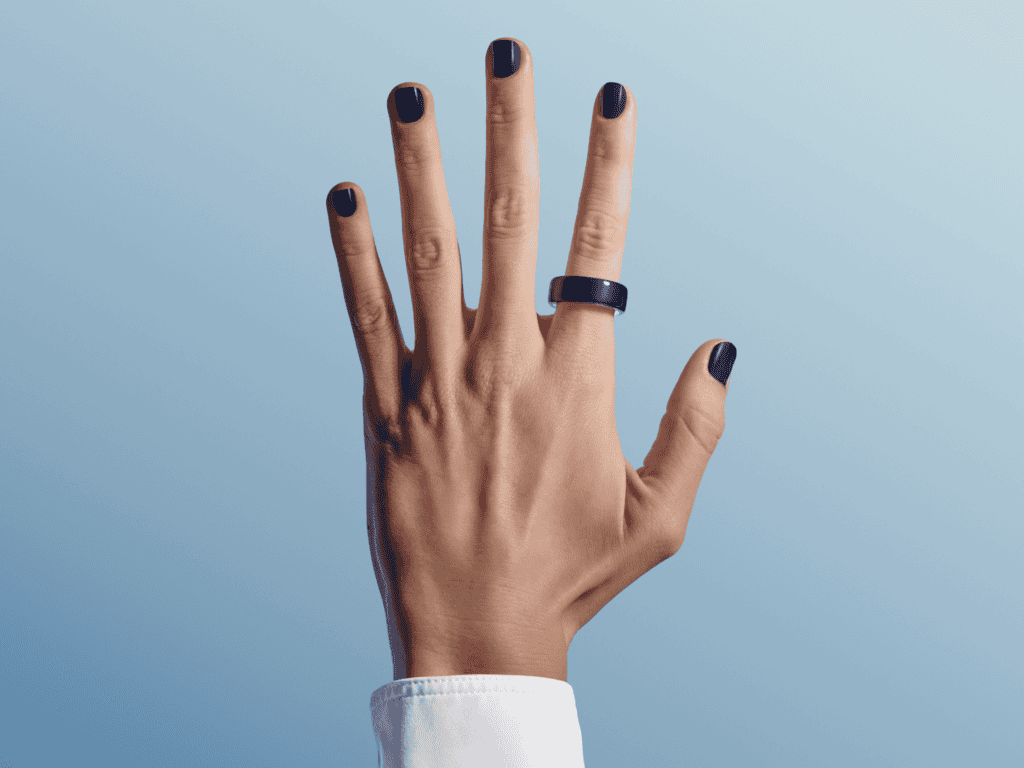
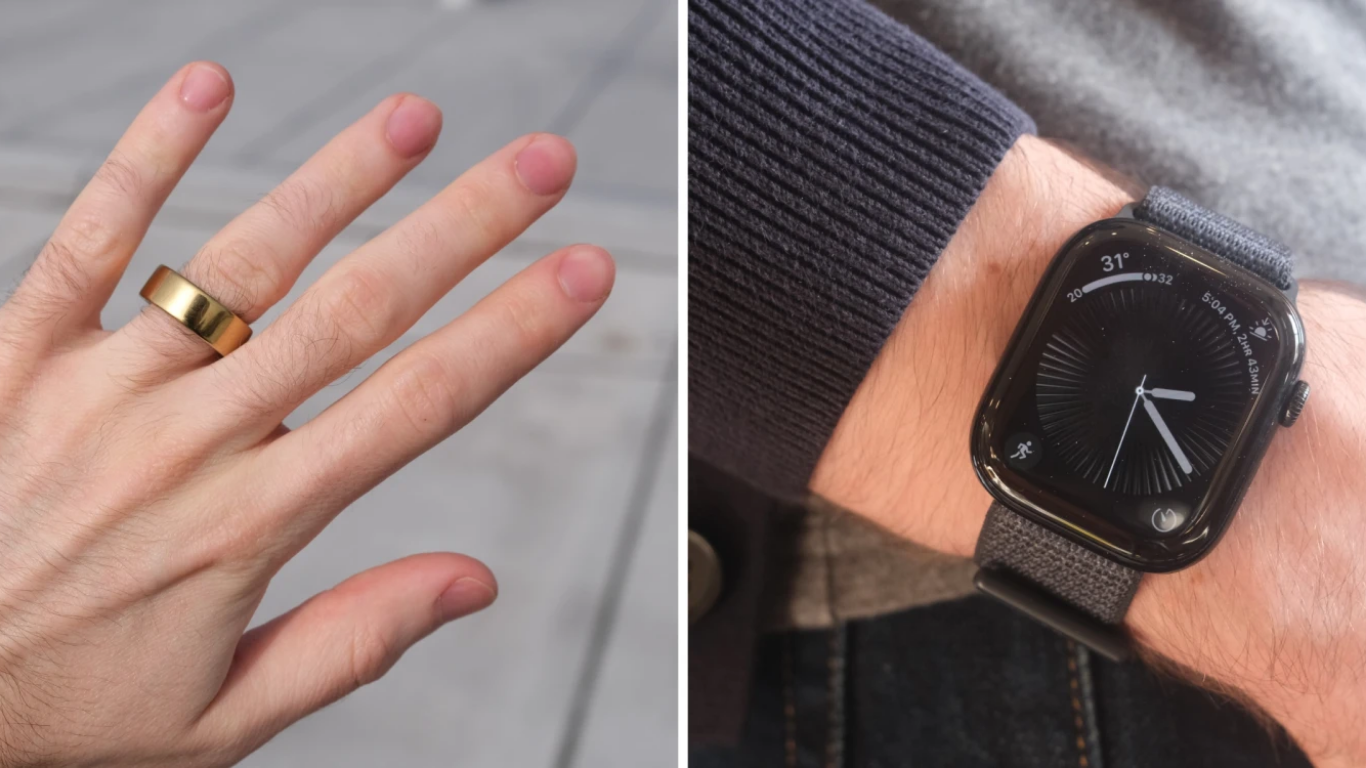
The Oura Ring is a smart health ring worn on your finger. It’s about the size of a regular ring discreet, lightweight, and designed to be worn 24/7 including during sleep and showering.
It tracks sleep stages, heart rate variability (HRV), body temperature, readiness, and activity, all without a screen. All data goes to the Oura app on your phone.
The current version is the Oura Ring 4, starting at $349 with a $5.99/month membership.
What is the Apple Watch?
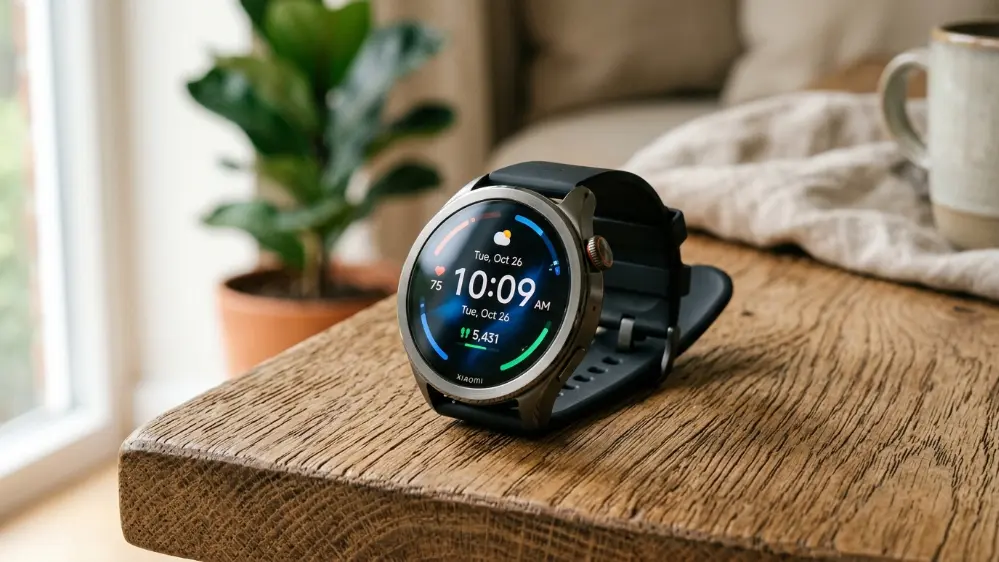
The Apple Watch is a full smartwatch worn on your wrist. It has a touchscreen, dozens of health sensors, GPS, cellular connectivity, thousands of apps, and can receive calls and messages.
It tracks heart rate, ECG, blood oxygen, sleep, activity, workouts, crash detection, and more, all with real-time data on your wrist.
The current lineup is the Apple Watch Series 10 starting at $399, with Apple Watch Ultra 2 at $799.
Head-to-Head Comparison
| Feature | Oura Ring 4 | Apple Watch Series 10 |
|---|---|---|
| Sleep Tracking | ⭐⭐⭐⭐⭐ Best in class | ⭐⭐⭐ Good |
| HRV Tracking | ⭐⭐⭐⭐⭐ Continuous | ⭐⭐⭐ Nightly |
| Body Temp Monitoring | ✅ Continuous | ✅ Wrist temp (Series 8+) |
| Heart Rate | ✅ Continuous | ✅ Continuous |
| ECG | ❌ No | ✅ Yes |
| Blood Oxygen (SpO2) | ✅ Yes | ✅ Yes |
| GPS | ❌ No | ✅ Built-in |
| Screen / Display | ❌ None | ✅ Always-on OLED |
| Notifications | ❌ No | ✅ Full notifications |
| Apps | ❌ No | ✅ Thousands |
| Calls and Messages | ❌ No | ✅ Yes (cellular models) |
| Battery Life | ✅ 5–7 days | ⭐ 18–36 hours |
| Water Resistance | ✅ 100m | ✅ 50m |
| Comfort for Sleep | ✅ Excellent | ⭐ Bulky for some |
| Design | Ring (jewellery) | Watch (wristband) |
| Starting Price | $349 | $399 |
| Monthly Fee | $5.99/month | None |
Sleep Tracking: Oura Ring Wins
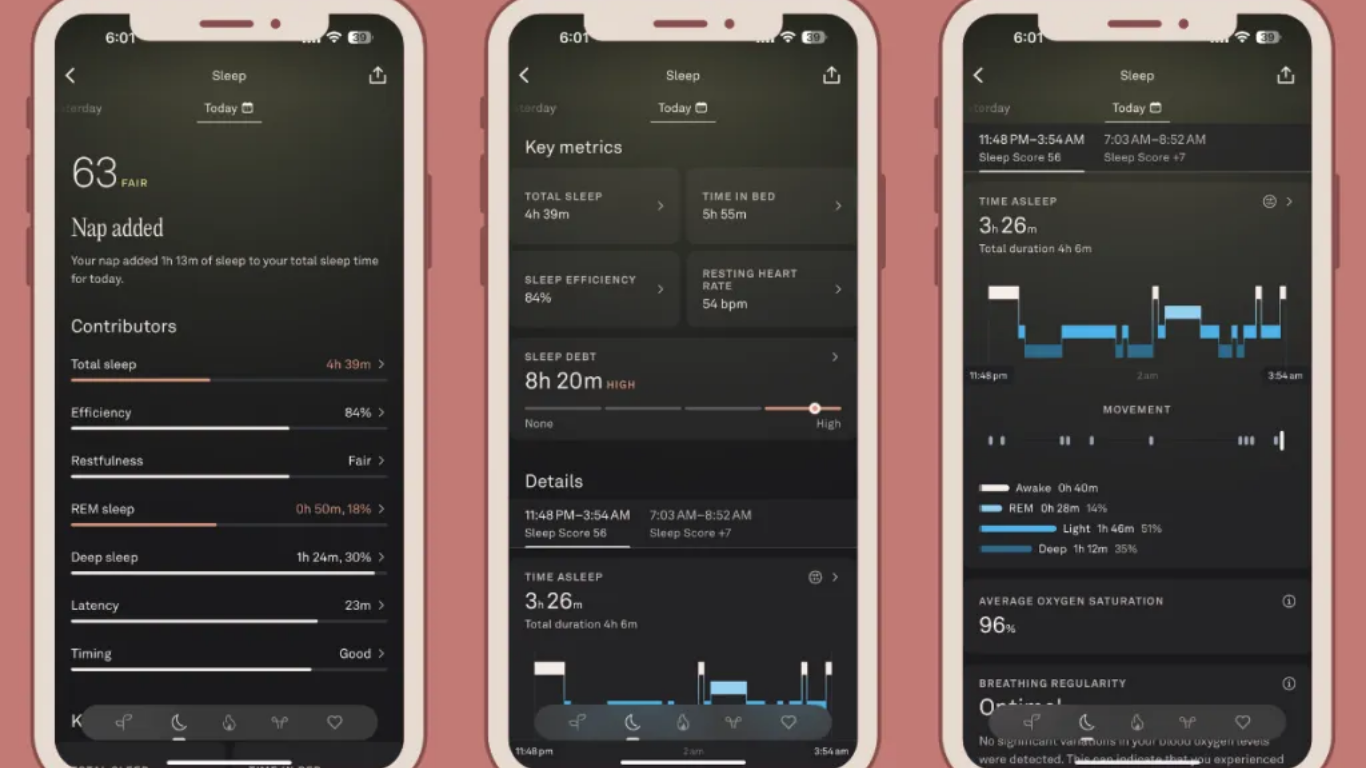
This is where the Oura Ring clearly dominates. Sleep tracking is its primary purpose, and it shows.
The Oura Ring tracks light sleep, deep sleep, and REM sleep with an accuracy that multiple clinical studies have validated against medical-grade polysomnography tests. It gives you a detailed sleep score every morning, showing exactly how restorative your sleep was.
Apple Watch sleep tracking is functional, it records time in bed, sleep stages, and respiratory rate. But it’s secondary to what the Watch does. The sensors are positioned on the wrist, which is less accurate than the finger for tracking blood flow and heart rate variability during sleep.
For anyone who prioritises understanding their sleep above everything else, Oura Ring is the clear winner.
Heart Rate and HRV: Oura Ring Has the Edge
Heart Rate Variability (HRV) is one of the best measures of overall recovery and stress. The higher your HRV, the more recovered and ready your body is.
Both devices track HRV, but in different ways:
- Oura Ring tracks HRV continuously throughout the night using infrared sensors on your finger, a more accurate location for blood flow measurement.
- Apple Watch tracks HRV during specific measurements (like a mindfulness session) and overnight, but less continuously.
For recovery-focused athletes and health optimisers, the Oura Ring’s HRV data is more detailed and consistent.
Workout Tracking: Apple Watch Wins
If you want to track workouts, Apple Watch is in a completely different league. It has:
- Built-in GPS to map outdoor runs, cycling routes, and hikes
- Over 100 workout types with auto-detection
- Real-time pace, distance, and heart rate zones on the display
- Apple Fitness+ subscription for guided workouts
The Oura Ring tracks activity and calories, but it has no GPS, no real-time feedback during workouts, and no screen to glance at during exercise.
For gym-goers, runners, cyclists, and anyone who values live workout data Apple Watch is the better choice by a wide margin.
Battery Life: Oura Ring Wins Easily
This is one of the most practical differences:
- Oura Ring 4: 5–7 days per charge
- Apple Watch Series 10: 18–36 hours per charge
Apple Watch needs to be charged almost every night meaning you often have to choose between charging it and wearing it during sleep. This directly limits its sleep tracking ability unless you develop a specific charging routine.
The Oura Ring’s multi-day battery means you wear it continuously, charge it for 20–30 minutes when needed, and never have to think about it before bed.
Comfort and Design
This comes down to personal preference:
Oura Ring: Feels like wearing a regular ring. Most people forget it’s there within a day. Available in silver, gold, black, and rose gold looks like jewellery, not a gadget. Ideal for people who don’t like wristbands or watches.
Apple Watch: Sits on the wrist like a watch. Comfortable for most, but some find it bulky during sleep. The band can cause sweating or irritation for sensitive skin during overnight wear.
If you already wear a watch or don’t mind wristbands, Apple Watch is fine. If you prefer minimal or jewelry-style wearables, Oura Ring wins on design.
Price Comparison
| Device | Upfront Cost | Ongoing Cost | 1-Year Total |
|---|---|---|---|
| Oura Ring 4 (Silver) | $349 | $5.99/month | ~$421 |
| Apple Watch Series 10 | $399 | None | $399 |
| Apple Watch Ultra 2 | $799 | None | $799 |
Interestingly, over a year, the Oura Ring actually costs more than the base Apple Watch when you include the membership fee. However, many users find the depth of health data justifies the ongoing cost.
Who Should Buy Each?
Buy Oura Ring if you:
- Care deeply about sleep quality and recovery
- Want the most accurate HRV and readiness data available
- Prefer discreet, jewellery-style wearables
- Want 5–7 day battery life without thinking about charging
- Don’t need notifications, GPS, or apps on your wrist
Buy Apple Watch if you:
- Want a full smartwatch with notifications and apps
- Need GPS for running, cycling, or outdoor activities
- Want real-time workout feedback on a screen
- Already use iPhone and want seamless Apple ecosystem integration
- Want an ECG feature for heart health monitoring
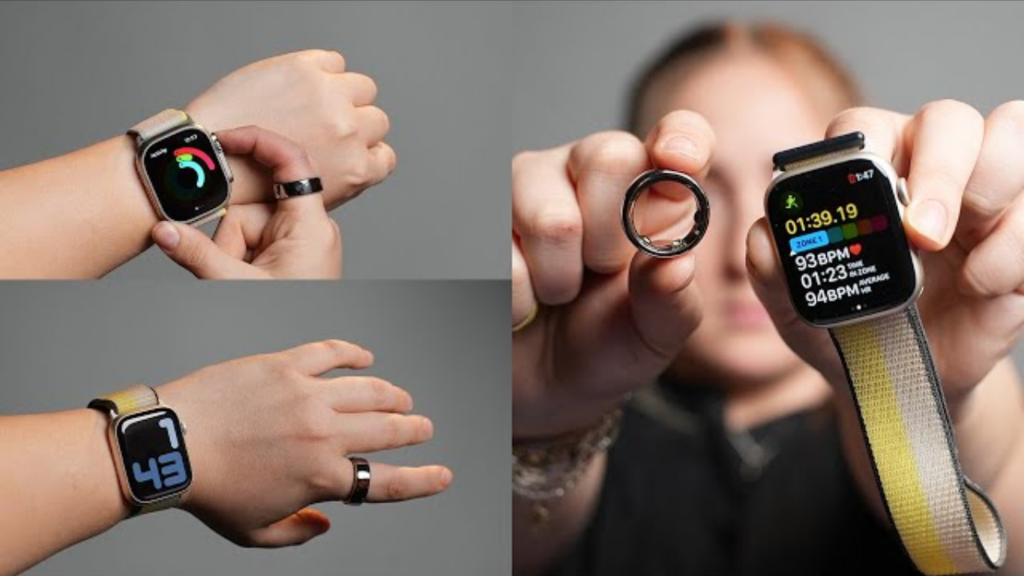
Buy both if you: Want the most complete health picture possible many serious health optimisers and athletes use Oura Ring overnight and Apple Watch during the day.
Frequently Asked Questions
Q: Can I use Oura Ring and Apple Watch together?
A: Yes, and many people do. Oura Ring for overnight sleep and recovery tracking, Apple Watch for daytime activity, workouts, and notifications. They don’t conflict with each other.
Q: Which is more accurate for health tracking?
A: Oura Ring is more accurate for sleep stages and HRV due to its finger-based sensors. Apple Watch is more accurate for real-time heart rate during intense exercise due to its wrist position and algorithms.
Q: Does Oura Ring work with Apple Health?
A: Yes. Oura Ring syncs data to Apple Health, so all your metrics are in one place alongside Apple Watch data if you use both.
Q: Is the Oura Ring subscription worth it?
A: For most users, yes. Without the membership, you lose access to the Readiness Score, detailed Sleep Score, and most health insights. The membership is what makes the ring useful.
Q: Which is better for weight loss?
A: Apple Watch is better for active calorie tracking during workouts. Oura Ring is better for understanding recovery and sleep quality, which are both important for sustainable weight management.
Q: Can Apple Watch replace Oura Ring?
A: For most people, no. Apple Watch’s sleep tracking is improving but still isn’t as detailed as Oura Ring. If sleep and recovery data are priorities, the two products serve different needs.
Conclusion
Oura Ring vs Apple Watch which is better? Neither is universally better. They’re built for different priorities.
If sleep and recovery data matter most to you choose Oura Ring. If you want a full smartwatch with notifications, GPS, and live workout tracking choose Apple Watch.
For the ultimate health tracking setup, many serious users wear both.
Also read: What is Oura Ring? The Smart Health Ring Simply Explained | What is a Smart Plug? 7 Best Uses and Complete Beginner’s Guide
Which one do you use? Tell us in the comments below!