The Amazfit Helio Strap has turned into one of those products where the search traffic tells you more than the marketing does. People aren’t just asking what it costs. They’re asking if they can shower in it, whether it needs a subscription, how to actually set the thing up, if it can replace their Whoop, and why it keeps going out of stock. This guide pulls all of that together, using the real questions people search rather than just repeating a spec sheet.
What the Amazfit Helio Strap Actually Is
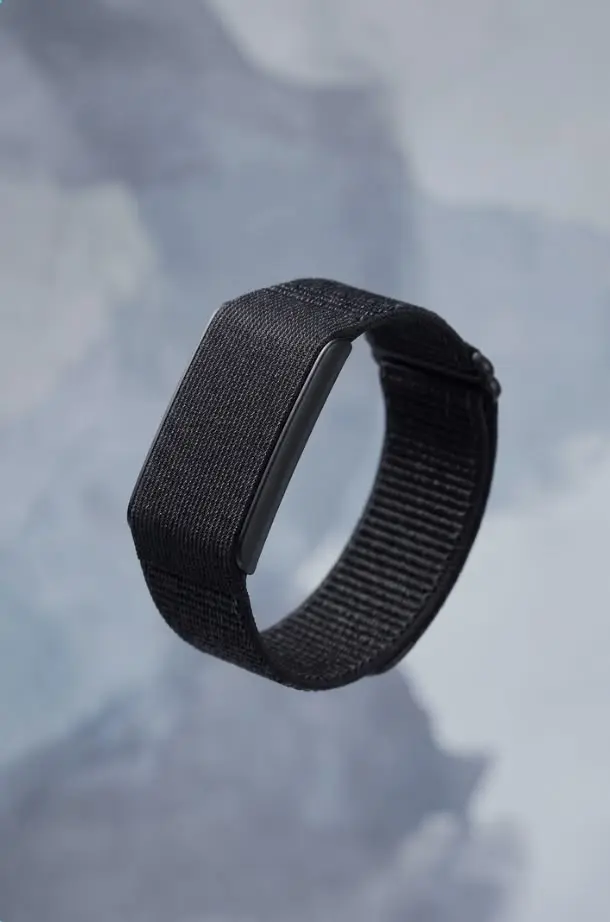
The Amazfit Helio Strap is a screen-free fitness and recovery band made by Zepp Health, the parent company behind Amazfit. It skips a display entirely and focuses on continuous tracking around the clock, heart rate, heart rate variability, blood oxygen, stress, and sleep, all synced through the Zepp App. It’s built as a direct, cheaper answer to Whoop, and that comparison isn’t accidental. Zepp Health designed it to compete in the same screenless recovery tracker category Whoop created.
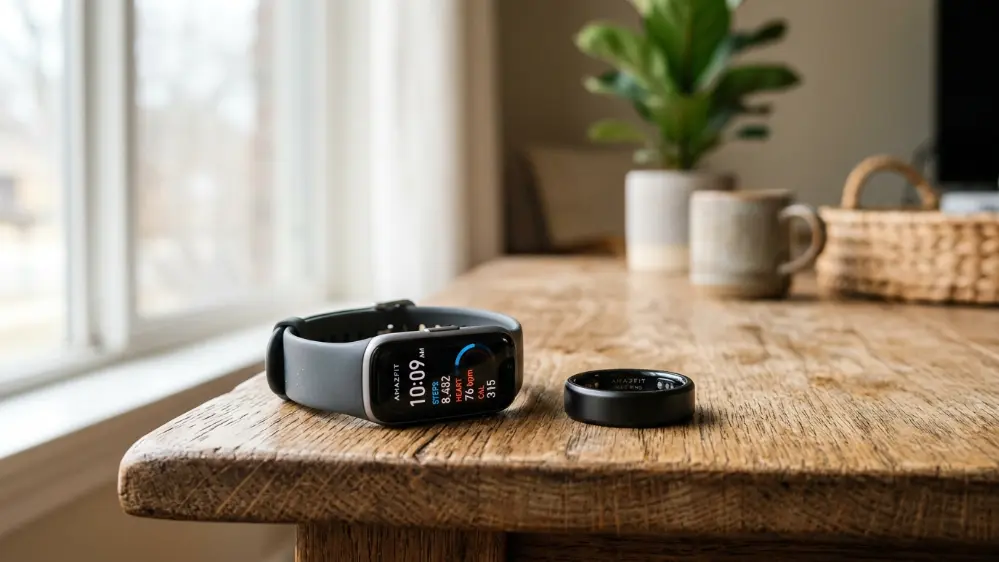
It’s worth clearing up some naming confusion right away, since a lot of people land here without realizing there are several related products with similar names. The Helio Strap is the original, standard band, and it’s what this guide focuses on. The Helio Ring is a separate finger worn device in the same family. The Helio Strap Pro is a newer, pricier two piece system built for HYROX and hybrid training. A next generation Helio Strap 2 is expected later in 2026. We’ll touch on how each differs from the original as we go.
Full Specs at a Glance
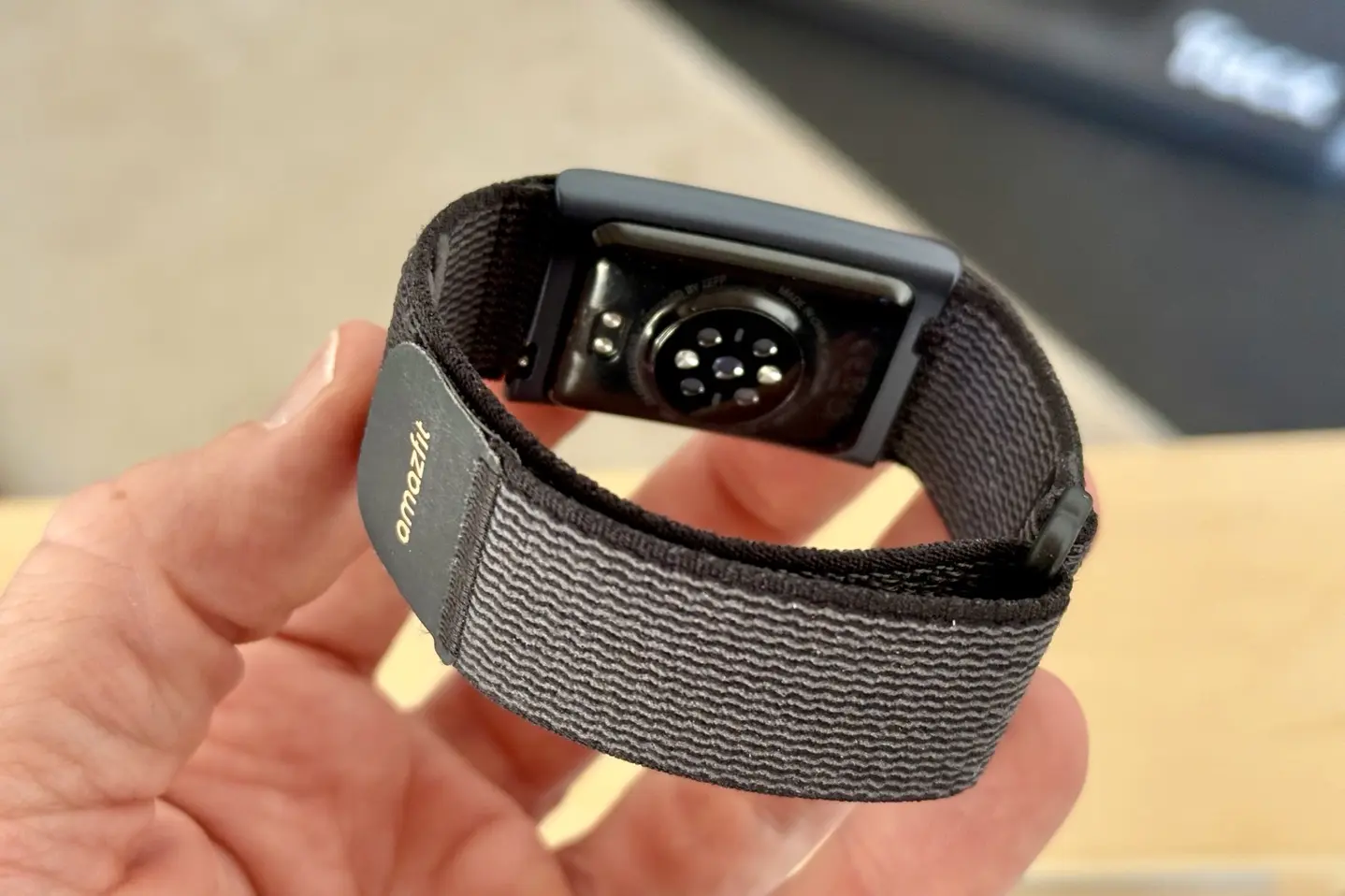
The Helio Strap runs on a 232mAh battery rated for up to 10 days between charges, and a full charge from empty takes around two hours through a small magnetic charging puck connecting to two pins on the back of the pod. It carries a 5ATM water resistance rating, covers 27 sports modes including automatic recognition for strength movements like squats, deadlifts, and burpees, and includes a dedicated HYROX Race mode that tracks station splits and transitions.
Inside the pod is a PPG heart rate sensor built with five photodiodes and two LEDs, working alongside an accelerometer, a gyroscope, and a skin temperature sensor. That multi photodiode setup is a genuinely thoughtful design choice at this price, since it helps compensate for movement and inconsistent skin contact, which is normally where cheaper heart rate sensors fall apart.
Price and the No Subscription Model
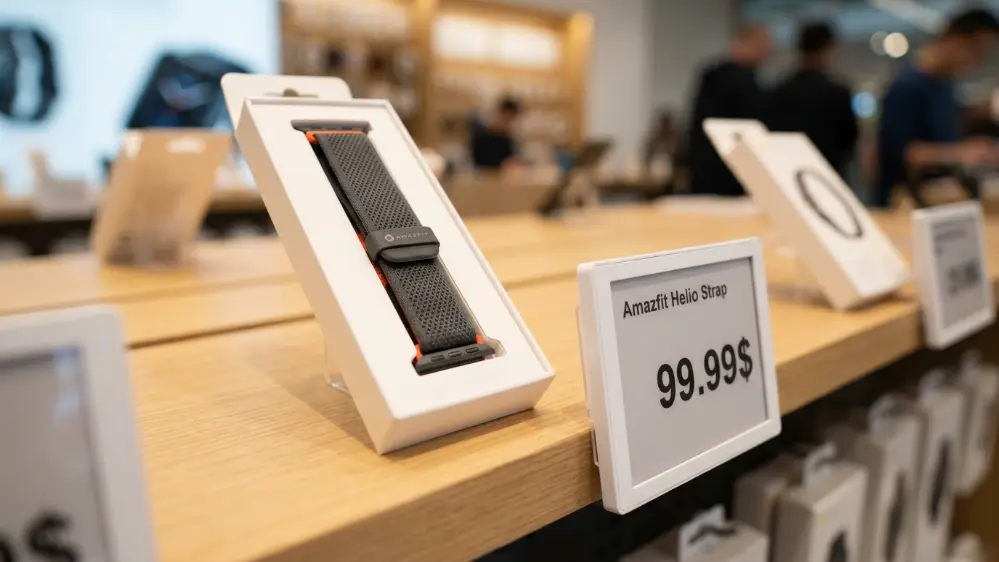
The Amazfit Helio Strap price sits at $99.99 in the US, £99.90 in the UK, and €99.90 in Europe, with no recurring membership fee attached, which is the biggest thing separating it from Whoop and the main reason people search for it as a Whoop alternative or Amazon Whoop competitor.
Regional pricing varies more than you’d expect for a device this simple. In India, the Amazfit Helio Strap price comes in at ₹8,999, generally sold through Amazon.in and Amazfit’s own India storefront. In Pakistan, where the product isn’t officially distributed, pricing swings much more widely, ranging anywhere from PKR 39,999 to PKR 69,999 depending on which importer or reseller you’re buying from, since there’s no authorized local distributor setting a fixed rate. If you’re shopping for it in Pakistan specifically, it’s worth comparing a few sellers before buying, since that gap between the low and high end of that range is significant for the exact same device.
Whoop’s membership model starts around $199 a year just to access the app and data your device already collects, on top of hardware cost. Over a year or two, that gap adds up fast. The Helio Strap’s one time price is the whole pitch. You pay once, and the core features work permanently.
Price competition has gotten tighter recently, though. Google’s Fitbit Air launched at the same $99.99 price point with a broadly similar pitch, and that’s put real pressure on Amazfit to justify the Helio Strap’s value beyond just being cheap. It’s part of why the rumored Helio Strap 2 is expected to hold the line at $99 rather than pushing higher.
Is the Amazfit Helio Strap Waterproof?
Yes, and this is one of the most searched questions about the device, so it deserves a straight answer. The 5ATM rating means it handles rain, sweat, hand washing, and showers without issue.
Swimming and heat are more nuanced. The rating technically allows for brief water exposure, including light swimming and snow, but reviewers note you should avoid saunas or very hot showers, since prolonged steam exposure can gradually damage internal seals. It’s also not marketed as a dedicated swim tracker, so don’t expect lap counts or swim specific metrics, even though the hardware should survive a swim fine.
What It Tracks, Answered Question by Question
Does it track steps? Yes, and step counting has tested as genuinely accurate, though the sensor takes a moment to register movement at the start of a walk before catching up.
Does it have GPS? No onboard GPS. Route mapping and distance rely on your phone being nearby over Bluetooth.
Does it have ECG? No. Neither the Helio Strap nor its expected successor include ECG, AFib detection, or blood pressure. Those need dedicated electrical sensors and regulatory accreditation that simply aren’t part of a $99 device, with no confirmed timeline for that changing.
Does it measure blood oxygen and temperature? Yes to both, tracked continuously as part of the core sensor package.
Does it have an alarm? Yes, but since there’s no screen or speaker, alerts and alarms come through as vibration only. Several reviewers flag the haptic motor as on the weaker side, so heavy sleepers shouldn’t rely on it alone for anything important.
How accurate is the heart rate tracking? Solid for everyday use, though testing has found it can overestimate by around 10 beats per minute during intense effort, which skews calorie estimates somewhat while still being fine for identifying heart rate zones. Wearing it on your upper arm instead of your wrist noticeably improves accuracy during exercise.
Can it broadcast heart rate live? Yes, over Bluetooth to compatible gym equipment or cycling computers during a tracked session, though it doesn’t support the older ANT+ standard some chest straps use.
Sleep Tracking and What Real Users Say
Sleep is consistently mentioned as one of the strongest parts of the Helio Strap experience, and search data shows plenty of people specifically checking real user feedback, including a cluster of Reddit related searches, before trusting it overnight.
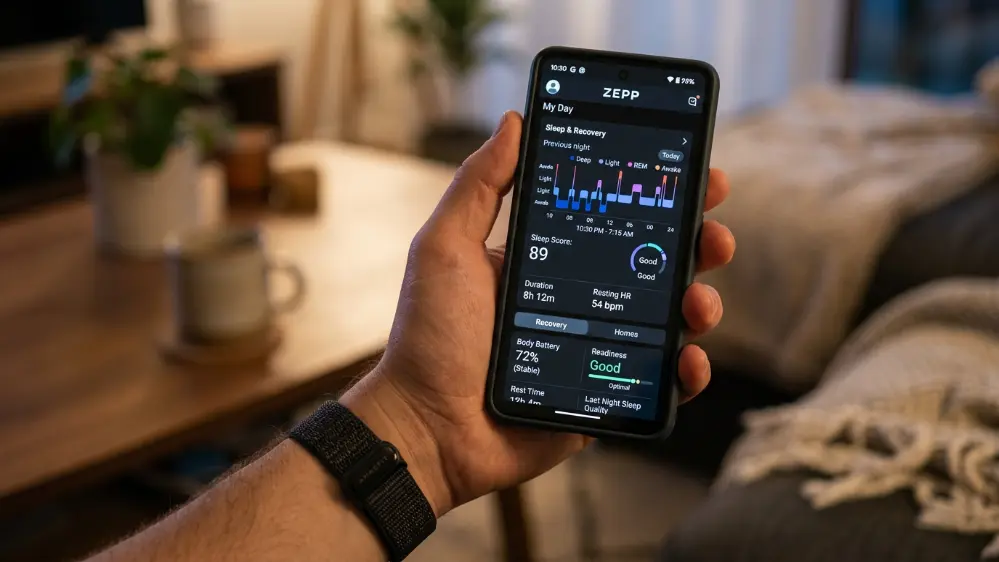
The overall sleep score tends to line up well with how rested people subjectively feel in the morning, and the device’s light weight makes it genuinely comfortable to sleep in. Where it’s less refined is finer detail. Sleep stage breakdowns and sleep onset timing have room for improvement compared to more established competitors. The assisted sleep monitoring works by combining accelerometer motion data with heart rate and HRV readings rather than a dedicated sleep sensor, which is standard across this entire product category rather than a unique weakness here.
Does It Need a Subscription, and What’s in the App
No subscription is required for core features, and this is one of the most repeated questions in the search data, showing people specifically shopping for a Whoop alternative check this before buying. Everything feeds into the free Zepp App.
The app mirrors Whoop’s structure closely, built around three main metrics. Sleep covers time in bed and sleep stage breakdown. Biocharge works like Whoop’s Recovery score, built from overnight HRV trends. Exertion works like Whoop’s Strain score, based on time spent in different heart rate zones. Beyond those three, the app also tracks PAI, fatigue level, estimated sleep apnea risk, training status, training load, and VO2 max on paired Amazfit smartwatches.
Reviewers have flagged that the app still feels like it’s maturing, with some describing it as functionally a beta product early on that’s steadily improved since. It’s stable and connects reliably day to day, just not quite as polished as Whoop’s longer established app.
Wearing It: Wrist, Bicep, and Whoop Adapters
The Helio Strap ships to be worn on your wrist by default, using a nylon strap with a loop and velcro fastening held onto the pod with a simple pin mechanism. Some reviewers find the included strap a little stiff compared to softer aftermarket options, which is part of why many people switch bands within the first few weeks.
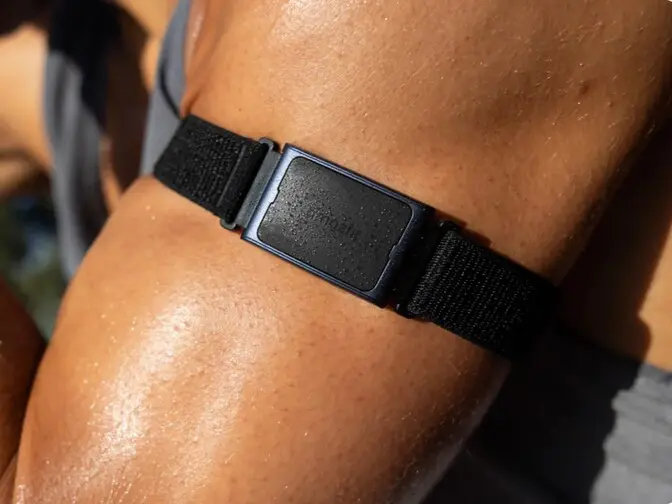
Amazfit also sells a separate bicep band, since wearing the sensor on your upper arm improves heart rate accuracy during workouts, particularly lifting, where wrist sensors tend to lose consistent skin contact. Several long term users wear it on the bicep full time rather than switching locations, describing a soft stretchy upper arm band as easy to forget about entirely.
This is where the accessory market gets interesting. A whole ecosystem has grown up around fitting the Helio Strap’s pod into Whoop compatible bands and bicep sleeves, and vice versa, letting people reuse bands they already own. Adapter designs have iterated enough that specific version numbers, like a newer “V2” design, carry their own search demand, usually meaning earlier versions had fit issues that got addressed later. These are third party products, not made by Amazfit, but popular enough to pull serious search volume on their own. If you already own Whoop bands, one of these adapters is worth looking into.

Colors, Special Editions, and the Helio Core Name
Beyond the original colorway, Amazfit has released additional options, including a white and gray patterned version and a darker gray and black version with orange accents, both priced the same as standard. Leaked packaging details point to a Premium version bundle including an arm strap and extra middle frame pieces, plus chatter around a ceramic finish variant for anyone wanting something above the standard nylon and plastic build.
If you train for HYROX or similar events, the standard Helio Strap already includes a dedicated HYROX Race mode tracking station splits and transitions, while the pricier Helio Strap Pro leans further into that with its two sensor design. The underlying sensor technology across the whole Helio lineup, including the Strap, Ring, and Pro, is generally referred to internally as Helio Core, a term worth recognizing since it refers to the sensor platform rather than a separate product.
Setup, Pairing, Charging, and Basic Care
Setup is straightforward. Install the Zepp App, create an account, and pair over Bluetooth by holding the pod near your phone and confirming the connection when prompted. It typically powers on automatically once placed on its charging puck, since the small battery ships with enough charge for initial setup.
Charging uses the included magnetic puck rather than a cradle, and it’s small enough to misplace easily, so keep track of it while traveling. A full charge from empty takes around two hours. If the band ever stops syncing properly, a factory reset option lives inside the device settings in the app, generally used as a troubleshooting step. For cleaning, a soft cloth with mild soap and water works fine, letting both pod and strap air dry fully before wearing again.
Amazfit Helio Strap vs Whoop
This comparison drives a huge share of search interest, and honestly, neither one wins across every category. Whoop still leads on ecosystem depth. Its coaching is more mature, automatic workout detection has had years longer to refine, and it doesn’t require pairing with a smartwatch to unlock its full experience, working as a fully independent product with deeper readiness insights.
The Helio Strap wins clearly on upfront cost and long term value, since there’s no subscription eating into the total price over time. Comfort also rates strongly in independent reviews, with the band light enough to forget you’re wearing it. Where it falls short is polish. The app is less refined than Whoop’s, automatic exercise detection isn’t as dependable, and some users report cheaper feeling components, occasional itchiness during extended wear, or functionality issues after several months.
If avoiding a recurring bill matters most and you can live with a slightly rougher software experience, the Helio Strap is an easy recommendation. If you want the most dependable, mature experience and don’t mind an annual fee, Whoop still holds the edge.
Where to Buy It, Stock Issues, and What’s Next
The Helio Strap sells through Amazfit’s own website, Amazon, and select retail partners, though availability at chains like Target has been inconsistent, so checking stock online tends to be more reliable than assuming a specific store carries it. It’s also available in India through Amazon.in and Amazfit’s own India site at the ₹8,999 price point mentioned earlier, even as some newer, pricier Helio products have taken longer to reach Indian retail listings. In Pakistan, since there’s no official Amazfit distributor, buyers typically go through local importers or resellers, which is why the Amazfit Helio Strap price in Pakistan varies so much between PKR 39,999 and PKR 69,999 depending on where you buy it.
It isn’t discontinued, despite frequent stock outs causing confusion. Zepp Health has acknowledged real supply constraints since launch, driven by demand outpacing production, and has stated more units would become available through 2026 as those issues resolve.
The original Helio Strap launched in mid-2025 and quickly became one of Amazfit’s strongest selling products of the year. Zepp Health’s CFO has confirmed a next generation Helio Strap for the second half of 2026, with FCC filing patterns pointing to a window between August and November, likely focused on faster charging and accuracy refinements rather than a full redesign, with pricing expected to stay anchored at $99. Separately, the Helio Strap Pro launched in June 2026 at $199.99 for HYROX specific training, requiring a compatible Amazfit smartwatch like the Balance 3 or Balance Ultra for full functionality, making it a meaningfully different purchase from the standard Strap covered here.
Is the Amazfit Helio Strap Worth Buying?
For anyone who wants Whoop style recovery tracking, sleep insight, and daily strain data without a monthly bill, the Helio Strap remains one of the easiest recommendations in this category. The hardware feels comfortable for extended wear, battery easily clears a week, and core metrics, step counting especially, hold up well against pricier alternatives.
The honest caveats are real too. The app trails Whoop in polish, automatic workout detection isn’t fully reliable, heart rate accuracy can drift during intense effort, the haptic alarm is weak, and stock availability has been inconsistent. If those tradeoffs don’t bother you, and paying once instead of every month appeals to you, the Helio Strap earns its reputation as a legitimate Whoop alternative rather than a cheap imitation.
Frequently Asked Questions
Can I shower or swim with the Amazfit Helio Strap? Yes for showering, and it handles brief water exposure while swimming thanks to its 5ATM rating, but avoid saunas or very hot showers, since prolonged steam can damage internal seals, and it doesn’t track swim specific metrics like lap count.
Does the Amazfit Helio Strap require a subscription? No. All core features work through the free Zepp App with no recurring fee.
Does it track blood pressure, VO2 max, or ECG? No, not currently. These require dedicated electrical sensors and regulatory accreditation that aren’t part of a $99 device, and there’s no confirmed timeline for adding them.
Does the Amazfit Helio Strap have an alarm? Yes, delivered through vibration only since there’s no screen or speaker, and the haptic motor has been described as on the weaker side by some reviewers.
How accurate is the Amazfit Helio Strap? Step counting is very accurate. Heart rate is solid for everyday use but can overestimate by around 10 beats per minute during intense exercise, improving noticeably when worn on the upper arm.
What’s the difference between the Helio Strap, Helio Ring, and Helio Strap Pro? The Helio Strap is the standard wristband. The Helio Ring is a separate finger worn device. The Helio Strap Pro is a pricier dual sensor system for HYROX training requiring a compatible Amazfit smartwatch.
Can I use Whoop bands with the Amazfit Helio Strap? Yes, through third party adapters, including newer “V2” designs that improved on earlier fit issues. These aren’t made by Amazfit but are popular for switching between ecosystems.
Is the Amazfit Helio Strap discontinued? No. It has faced real supply constraints and stock shortages, but Zepp Health has confirmed more units are being produced and it remains active in the lineup.
Why does it keep going out of stock? Zepp Health has acknowledged demand outpacing production since launch, with additional units expected through 2026 as supply issues resolve.
How much does the Amazfit Helio Strap cost in India and Pakistan? In India, the Amazfit Helio Strap price is ₹8,999, sold through Amazon.in and Amazfit’s own India storefront. In Pakistan, where there’s no official distributor, pricing ranges between PKR 39,999 and PKR 69,999 depending on the importer or reseller, so it’s worth comparing sellers before buying.
Is the Amazfit Helio Strap available in India? Yes, through Amazon.in, though some newer Helio family products have taken longer to reach Indian retail listings.
How do I set up and pair it? Install the Zepp App, create an account, and pair over Bluetooth by holding the pod near your phone and confirming the connection when prompted.
When is the Amazfit Helio Strap 2 coming out? Zepp Health’s CFO confirmed a next generation model for the second half of 2026, with FCC filings suggesting a launch window between August and November.