Siri AI 2026 is Apple’s answer to two years of jokes, criticism, and delayed promises about its voice assistant. For years, Siri was the punchline of every “my phone’s assistant is dumber than my toaster” joke. It could set a timer, sure. Ask it anything more complicated and you’d get a web search dumped in your lap instead of an actual answer. That changed on June 8, 2026, when Apple stood on stage at WWDC and introduced Siri AI, the biggest rebuild the assistant has ever gone through.
If you’ve seen headlines about Siri AI 2026 and you’re not totally sure what changed, or whether it’s worth caring about, this guide breaks it down in plain terms.
Why Siri Needed This So Badly
Apple first promised a smarter Siri back in June 2024, when it announced Apple Intelligence. The pitch was big. Siri would understand your personal context, take actions across your apps, and finally act like an assistant instead of a glorified alarm clock. Then the delays started. Features slipped from 2024 to 2025. Then some of those slipped again.
Two years is a long time in the AI world. In that stretch, ChatGPT became a household name, and people got used to typing full paragraphs to a chatbot instead of barking one line commands at a speaker. If you want to see how that rivalry actually plays out feature by feature, we broke it down fully in ChatGPT vs the New Siri: Which AI Assistant Actually Answers Better. Siri, meanwhile, stayed roughly the same assistant it had been since 2011, just with a nicer voice.
So when Tim Cook opened WWDC 2026 by addressing the criticism head on, it wasn’t subtle. Apple built the entire keynote around fixing what was broken before showing off anything new.
What Siri AI Actually Is
Siri AI is not a paint job on the old assistant. Apple rebuilt the underlying system from scratch, and the result behaves less like a voice command tool and more like the AI chatbots you’ve probably already used, including OpenAI’s own agent-driven tool, ChatGPT Work, which launched a few weeks after Siri AI was announced.
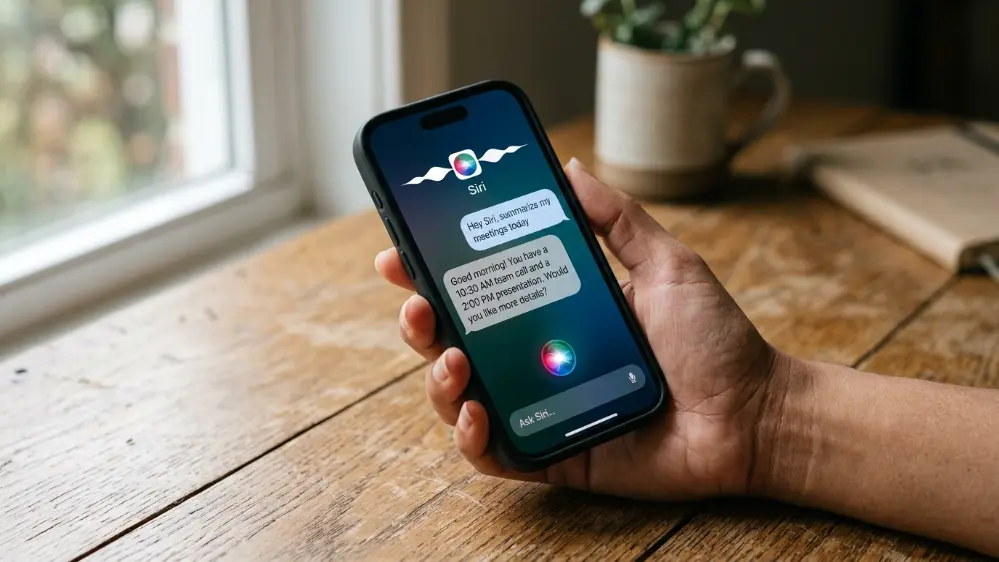
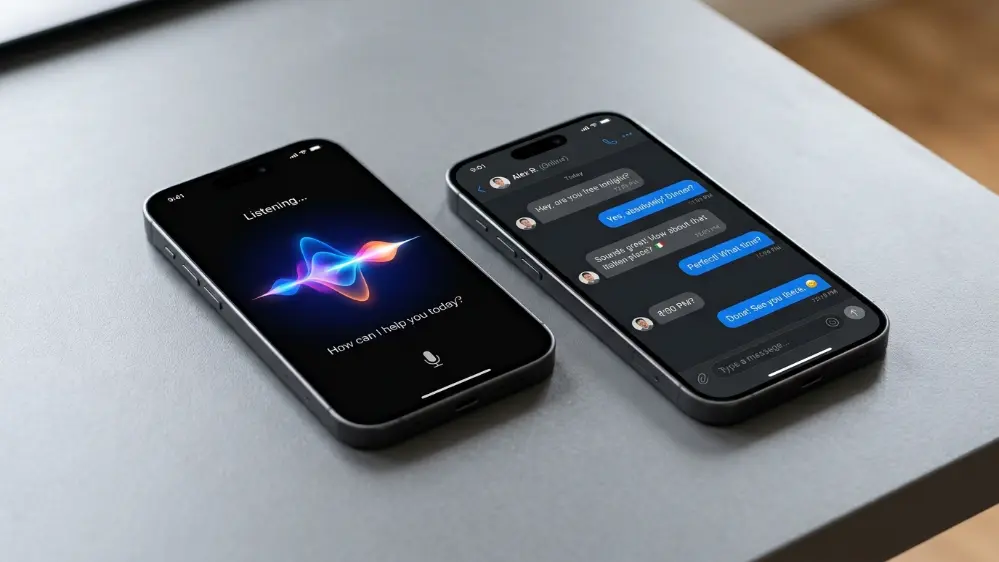
The biggest structural change is that Siri now lives inside its own standalone app, separate from the quick voice activation you’re used to. That app keeps a running history of your conversations, synced privately through iCloud, so you can scroll back, search old exchanges, and pick a conversation back up instead of starting from zero every time.
The second big shift is conversational memory. Old Siri had the memory of a goldfish. Ask a follow up question and it would act like you were talking to it for the first time. Siri AI can hold a thread across multiple exchanges, understand what “it” or “that one” refers to a few turns later, and keep track of context without you repeating yourself.
It Runs on Google’s Gemini, Not Apple’s Own Model
Here’s the part that surprised a lot of people. Siri AI’s conversational engine is powered by a custom version of Google’s Gemini model, reportedly a 1.2 trillion parameter system built specifically for Apple. Multiple reports put the licensing deal at roughly a billion dollars a year.
That’s a notable move for a company that usually insists on building everything itself. It tells you two things. First, Apple didn’t think its own large language model was ready to carry the assistant experience it wanted to ship. Second, the pressure to catch up with ChatGPT and Gemini was strong enough that Apple was willing to hand a core piece of its ecosystem to a direct competitor’s technology.
If you want to see how Google’s Gemini is showing up elsewhere in your daily life, it’s also the engine behind the new AI coach inside Google’s Fitbit Air, which launched just a few weeks before Siri AI was announced, and it’s one of the three assistants we ranked in our Best AI Assistant Apps of 2026 roundup.
On Screen Awareness: Siri Can Finally See What You’re Looking At
This is the feature demo videos kept circling back to. Siri AI can now look at what’s currently on your screen and answer questions about it. See a restaurant mentioned in a text message? Ask Siri about it without switching apps. Looking at a photo and want to know where it was taken? Just ask.
Visual Intelligence, the name Apple gave this capability, works a little differently depending on the device:
- On iPhone, there’s a dedicated Siri mode built right into the Camera app, sitting next to Photo, Video, and Portrait modes.
- On Mac, keyboard shortcuts let you query whatever’s on your screen without touching the mouse.
- On iPad, it’s woven into the screenshot experience.
- On Vision Pro, you can ask about physical objects around you just by looking at them.

Multi-Step Commands: One Sentence, Several Actions
Old Siri could barely chain two actions together without getting confused. Siri AI is built to handle multi-step requests in a single sentence. Instead of asking it to check the weather, then separately asking it to text a friend about bringing an umbrella, you can string that into one request and have it carry out both steps.
Apple is also reportedly working on agentic extensions for Siri, meaning it could eventually take real actions inside third party apps on your behalf, a direction that mirrors what OpenAI is already attempting to solve with its own Jony Ive-designed AI hardware project.

Which Devices Actually Get It
Siri AI is rolling out across iPhone, iPad, Mac, Apple Watch, and Vision Pro, but with real limits.
For Apple Watch, Apple has tightened hardware requirements. Older models are being left out entirely. You’ll need at least a Series 9, Series 10, Series 11, Ultra 2, Ultra 3, or the new SE 3 to get the upgraded assistant.
There’s also a language and region catch. Siri AI is launching in English first, with other languages expected to follow later. It will not be available at launch in the European Union or in China, due to regulatory requirements in those markets.
The operating system updates carrying all of this, iOS 27, iPadOS 27, macOS 27, watchOS 27, tvOS 27, and visionOS 27, are heading into public beta and are expected to reach most users this fall. Siri AI itself is arriving in beta separately, a little behind the OS rollout.
How Does It Compare to ChatGPT?
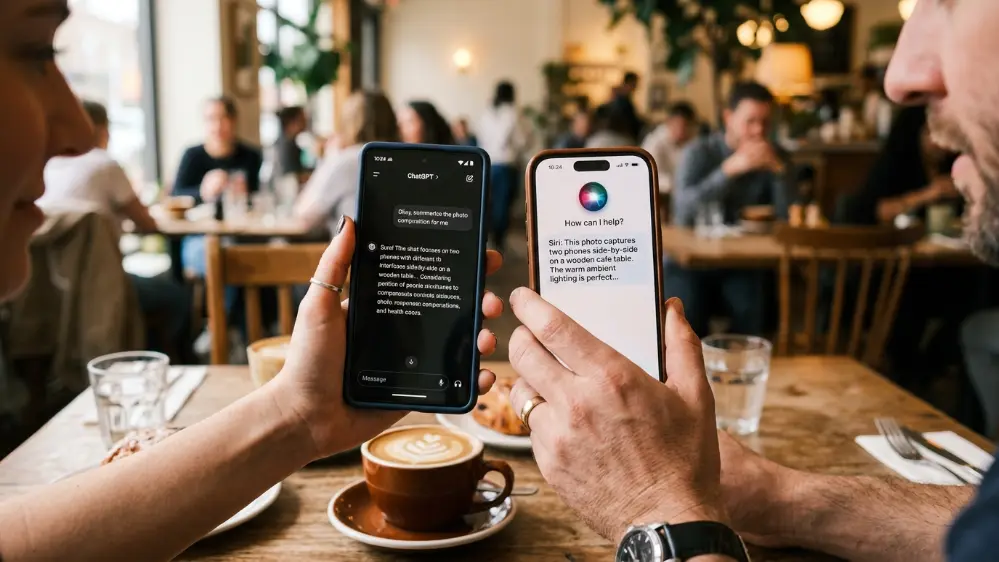
This is probably the question most people actually care about. Based on what’s been shown so far, Siri AI covers a lot of the same ground as ChatGPT: conversational memory, natural back and forth dialogue, and the ability to pull in real time information from the web. Where it’s different is depth and flexibility. ChatGPT is built to handle a huge range of open ended tasks. Siri AI, at least for now, is more tightly focused on being a personal assistant woven into your devices.
We put the two head to head in more detail here: ChatGPT vs the New Siri: Which AI Assistant Actually Answers Better?
Is Siri AI Worth Getting Excited About?
Here’s the honest take. Apple spent two years building expectations sky high, then delayed enough features that a lot of people stopped believing the hype. What actually showed up at WWDC 2026 is a genuine step forward. A standalone app, real conversational memory, and screen awareness are things Siri simply never had before.
That said, the gap between a keynote demo and daily reliability always matters more than the demo itself. The July beta is where we’ll find out if Siri AI holds up under normal, messy, everyday use.
If you’re curious how the wider AI assistant market stacks up right now, including Siri AI’s place in it next to Google’s Fitbit Air ecosystem and Whoop-style wearables covered in our Fitbit Air vs Oura Ring vs Whoop comparison, check out our full roundup: Best AI Assistant Apps of 2026: ChatGPT vs Gemini vs Siri Compared
Quick Recap
- A standalone Siri app with saved, searchable conversation history
- Real conversational memory across multiple exchanges
- Visual Intelligence, letting Siri understand what’s on your screen or camera
- Multi-step, chained commands from a single request
- Powered by a custom Google Gemini model behind the scenes
- Rolling out in English first, skipping the EU and China at launch
- Requiring newer hardware, especially on Apple Watch
Frequently Asked Questions
When does Siri AI 2026 come out? Siri AI is rolling out in beta later in 2026, following the public beta of iOS 27 and related operating systems, which is expected next month after WWDC. A wider release is expected this fall.
Does Siri AI work on older iPhones? Apple hasn’t published a full compatibility list for iPhone yet, but the Apple Watch requirements are already known and require Series 9 or newer. Expect similar hardware cutoffs on other devices given the on-device processing Siri AI relies on.
Is Siri AI available in the EU? No, not at launch. Apple has confirmed Siri AI will not be available in the European Union or China at launch due to regulatory requirements in those regions.
Is Siri AI actually powered by ChatGPT? No. Siri AI runs on a custom version of Google’s Gemini model, not OpenAI’s technology. Apple pays Google for access to this custom model.
Can Siri AI see what’s on my screen? Yes. This is called Visual Intelligence, and it lets Siri understand and answer questions about content currently displayed on your screen or in front of your camera.